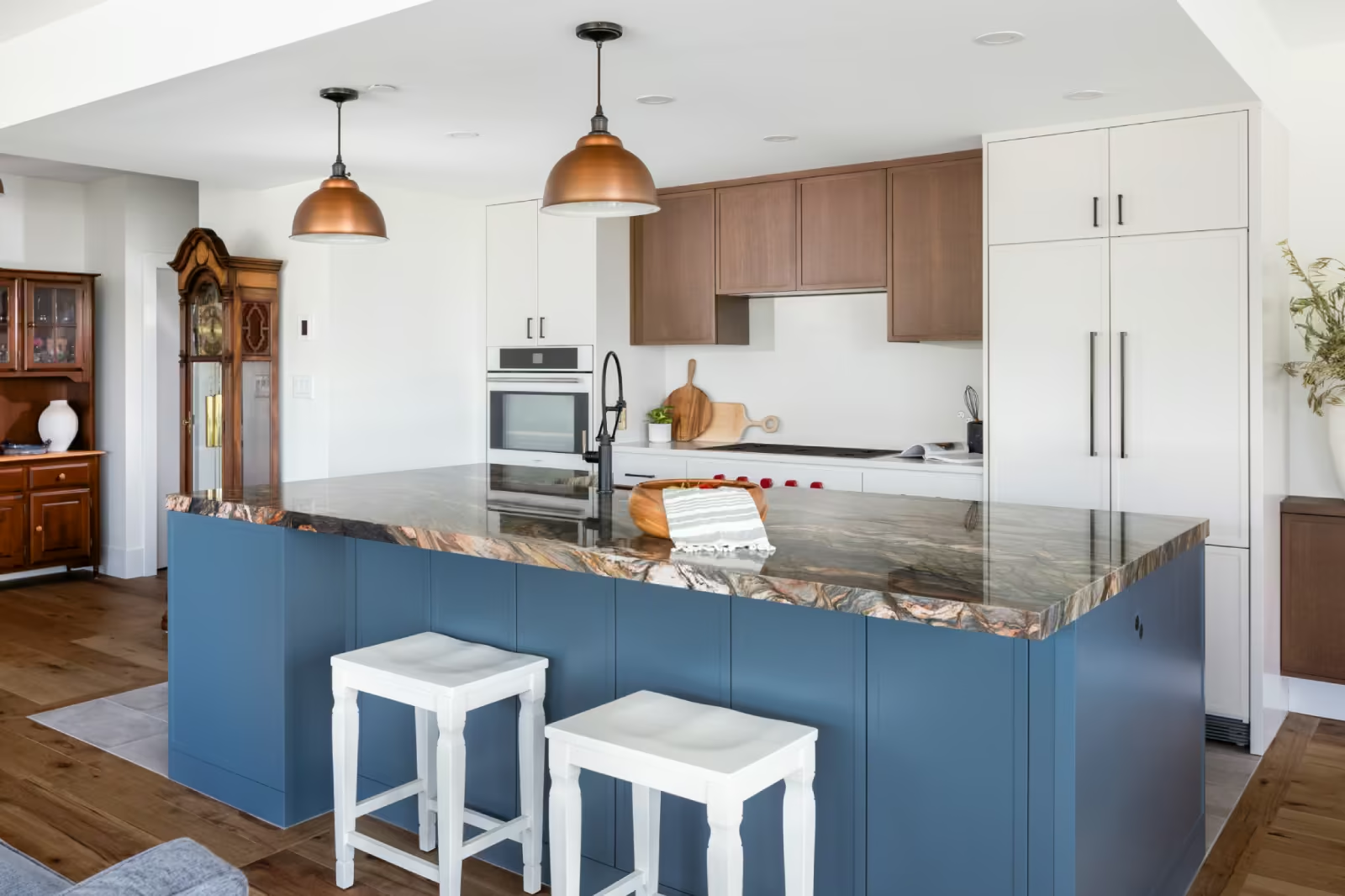



A modern open concept kitchen with clear sightlines between cooking, dining, and living spaces.
If you own a 1970s split‑level in Burnaby or a post‑war bungalow in East Vancouver, chances are you’ve stood in the kitchen thinking, “If only this wall weren’t here.” Open concept kitchen ideas are everywhere right now, but in real Metro Vancouver houses they bump up against practical questions: Is that wall structural? Do we need permits? What happens to our heating, cooling, and cooking smells once everything is wide open?
In this guide, we’ll walk through how open layouts actually work in Vancouver and Burnaby homes—from concept kitchens and layout options to load‑bearing walls, permits, and HVAC. The goal: help you talk to a qualified design‑build contractor with confidence, rather than guessing with a sledgehammer.
TL;DR: Thinking about opening up your kitchen?
- Most walls between kitchen, dining, and living areas in older Vancouver and Burnaby homes are either fully or partially load‑bearing.
- Removing or altering structural walls nearly always requires engineering and building permits, plus separate trade permits.
- HVAC and ventilation need just as much planning as cabinetry—odours, smoke, and noise travel farther in an open plan.
- A design‑build team can test options, coordinate engineering, handle permits, and manage construction as one integrated process.
What “open concept” really means in Vancouver & Burnaby houses
On Instagram, open concept looks like one big, bright room with a perfect island and no walls in sight. In real houses across Vancouver and Burnaby, we’re usually dealing with a maze of small rooms, low bulkheads, and a few mystery posts someone added in the 1990s.
From a design‑build perspective, an “open” or “concept” kitchen usually means:
- A visual and functional connection between kitchen, dining, and living spaces.
- Clear sightlines (you can see the kids in the family room while you’re cooking).
- Shared light—windows in one room brighten the others.
- Traffic flow that suits your household, not just the original 1950s floor plan.
That might mean removing a full wall, a half wall, or just widening a cased opening. In some character and heritage homes, we keep strategic sections of wall or original beams to respect the architecture while still creating the feeling of an open plan.
To see how dramatically this can change a home, browse the kitchen and main‑floor projects in our renovation portfolio.
Popular open concept kitchen designs we see locally
Over the years we’ve seen homeowners sketch everything from basic concept kitchens on napkins to full Pinterest boards. Here are a few open concept kitchen designs that tend to work especially well in Metro Vancouver homes.
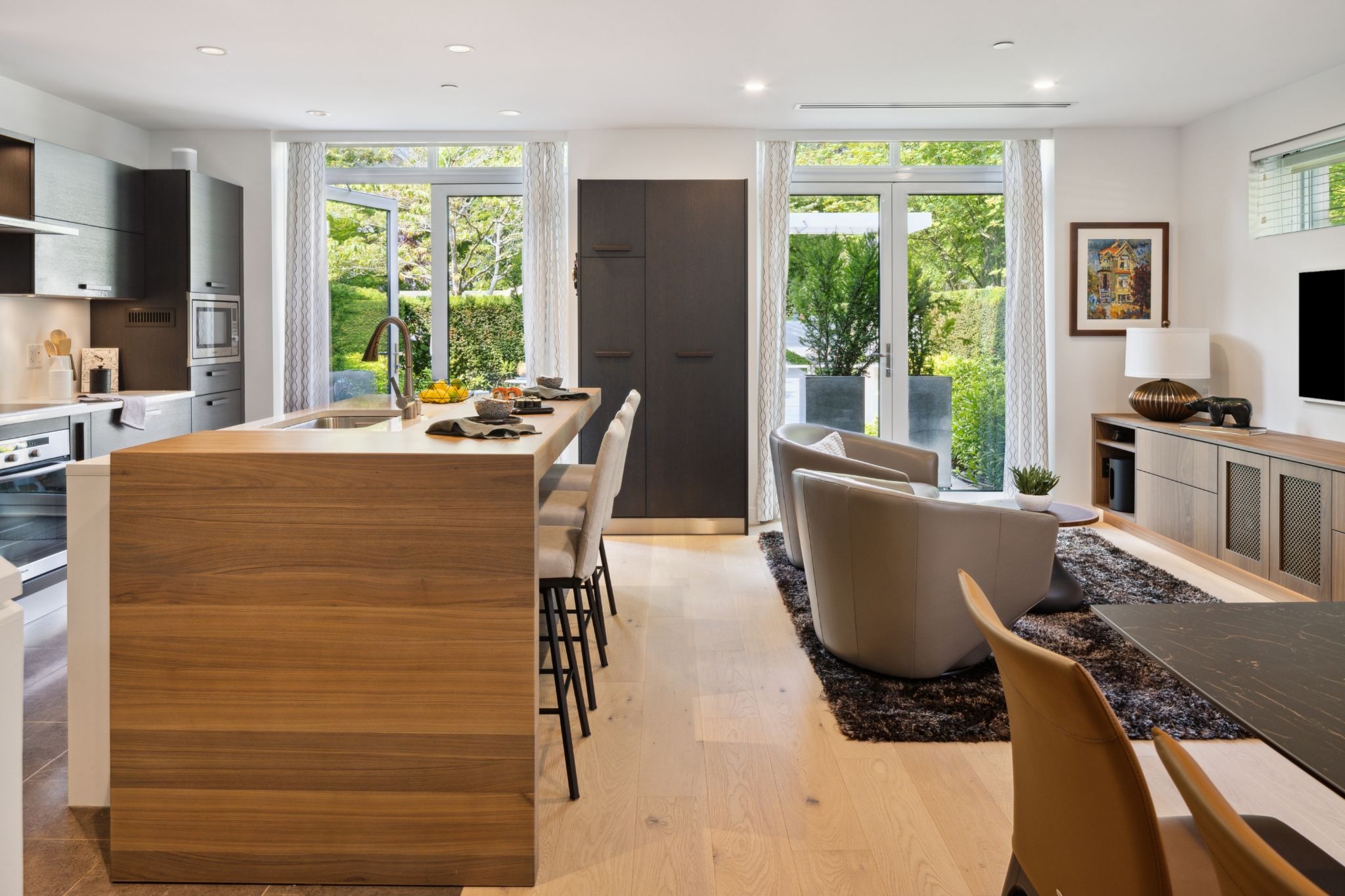
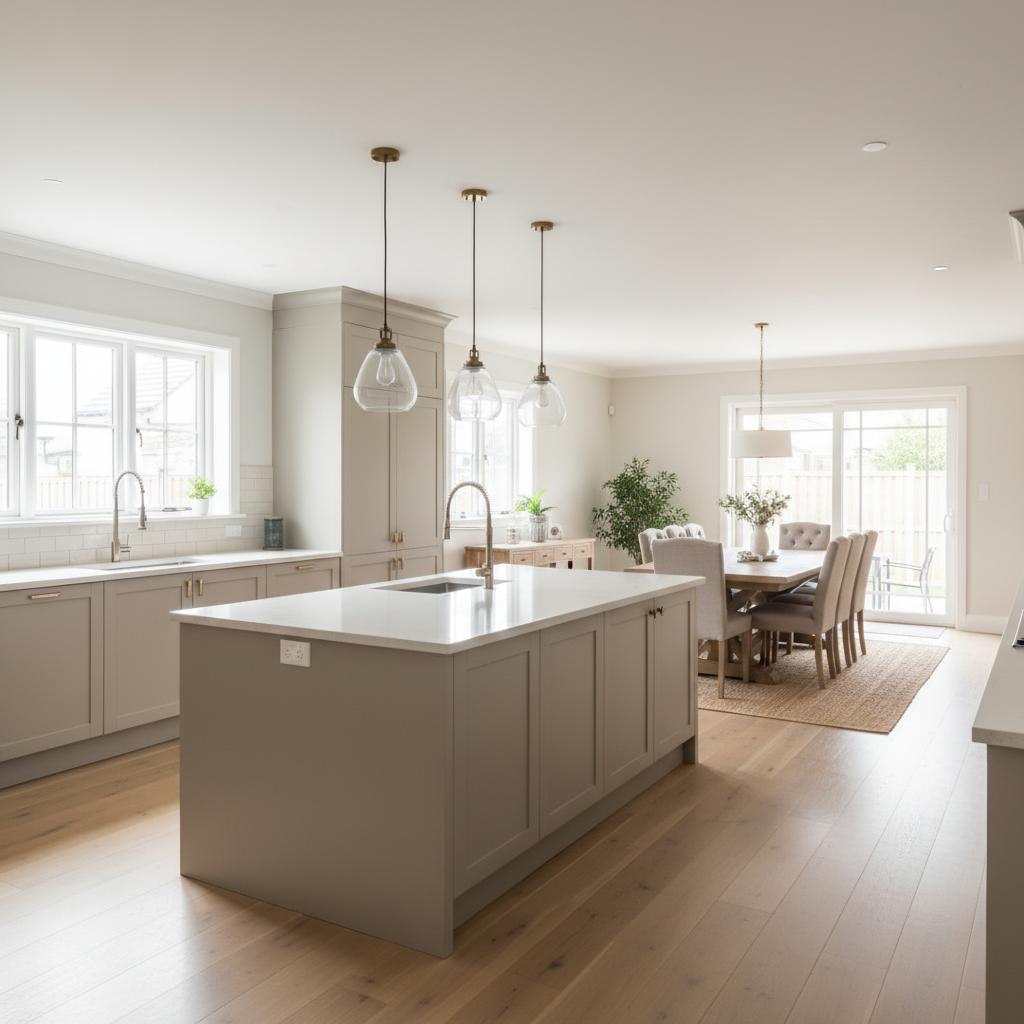
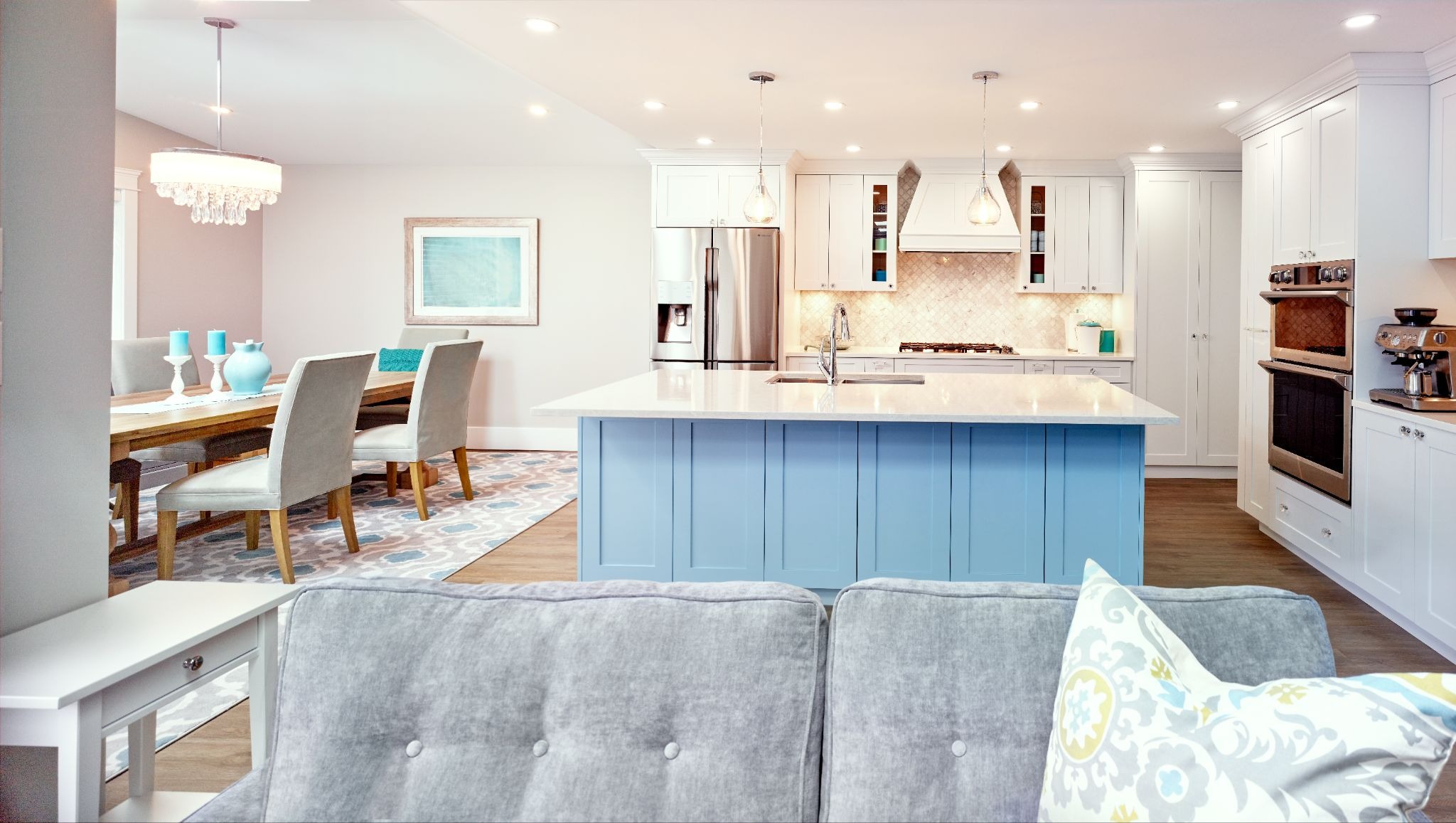
A classic open concept kitchen layout where a former wall is replaced by a functional central island.
1. Kitchen–dining combo with a central island
This is the classic open concept kitchen remodel: the wall between a small kitchen and separate dining room comes out, and a large island replaces it. The kitchen gains prep space and storage; the dining area feels brighter and less formal.
- Best for: 1950–1980s homes with a narrow kitchen and an underused dining room.
- Watch for: Structural walls running down the middle of the house and ductwork hidden in bulkheads.
2. U‑shaped kitchen opened to the family room
Many Burnaby split‑levels and Vancouver specials have a U‑shaped kitchen boxed in by a peninsula. Removing that upper cabinetry and dropping the peninsula down to island height opens sightlines to the family room, even if a beam or post needs to stay.
3. Partial‑height or “pony” walls
In some character homes, a fully open concept would feel wrong for the age and style of the house. In those cases, we sometimes replace a full wall with a partial‑height wall or integrated storage, which keeps some separation for furniture placement and noise while still sharing light.
You can see how these layouts play out in real homes in our full‑service design‑build overview, where we break down how we re‑plan main floors, not just swap cabinets.
Load‑bearing walls: What you can and can’t take out
Here’s the part HGTV tends to skip: many of the walls homeowners want gone are doing serious work. A load‑bearing wall carries the weight of floors, roof, or upper walls down to the foundation. Take it out the wrong way, and you can cause structural sagging, cracked finishes, or worse.
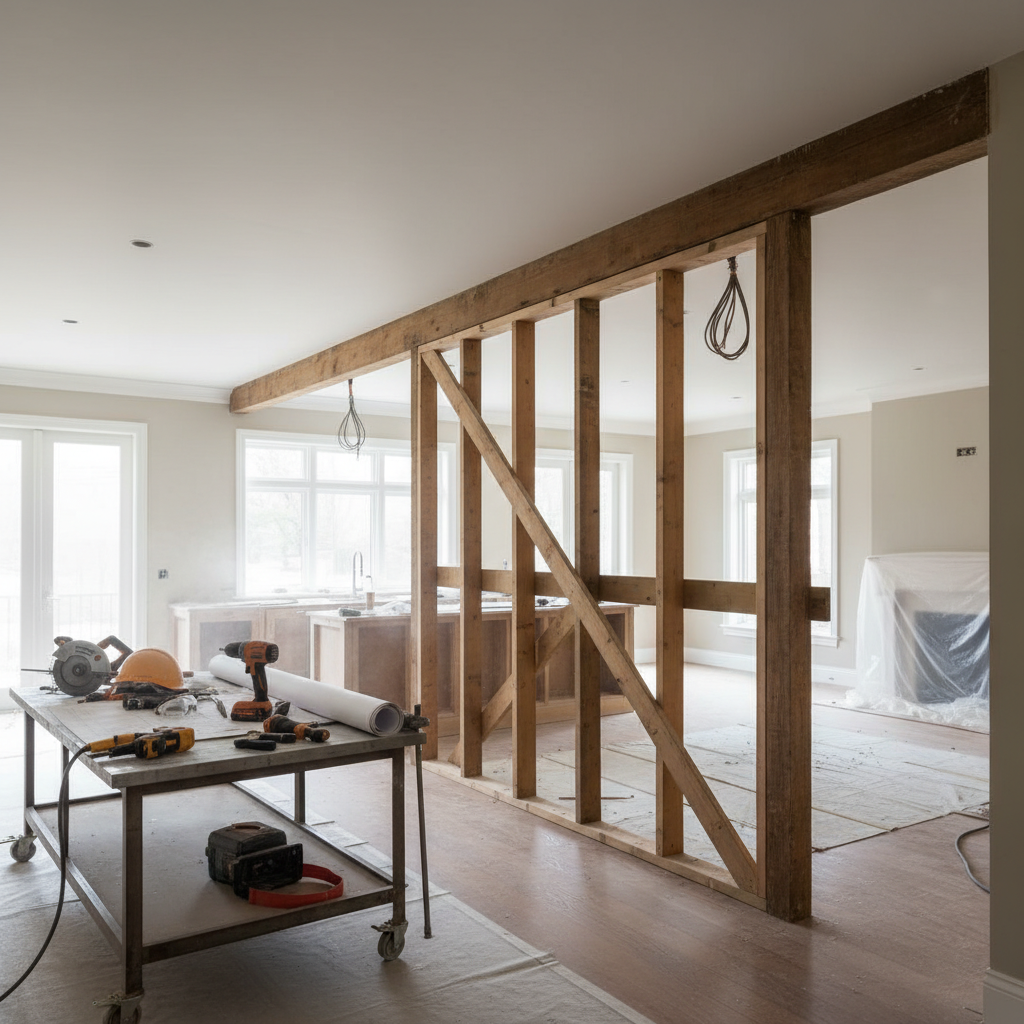
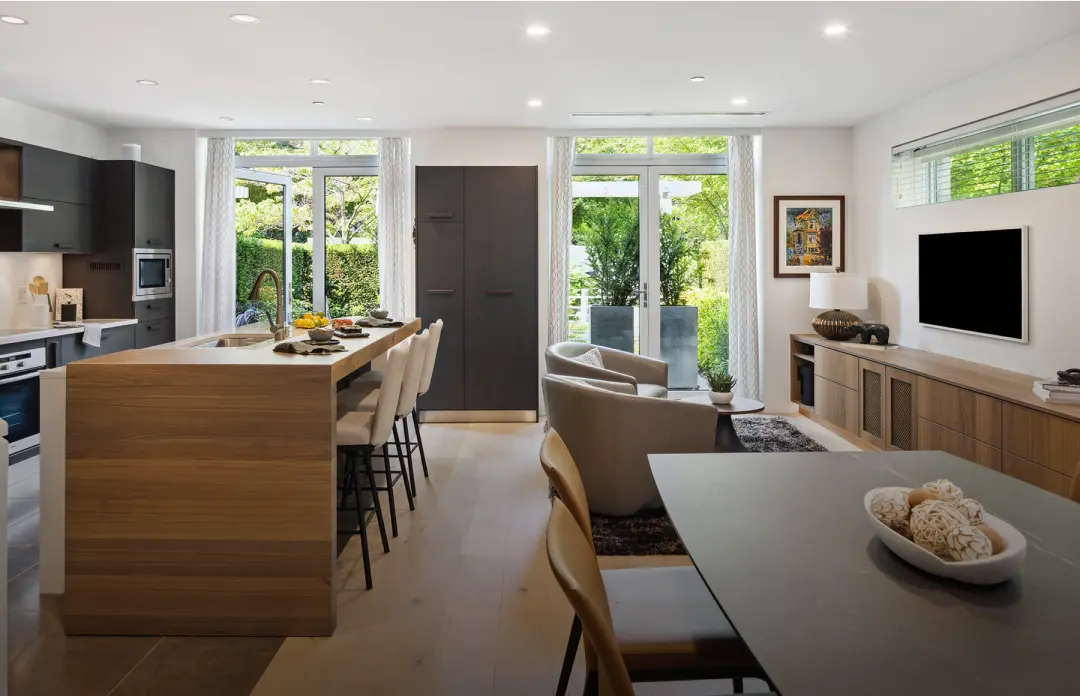
A partially opened kitchen and living area showing structural supports where a wall has been removed.
How to tell if a wall might be structural
A site visit from a qualified contractor or structural engineer is the only reliable way to know, but there are a few clues:
- The wall runs perpendicular to your floor joists.
- There’s another wall stacked above it on the second floor.
- It lines up with beams or posts in the basement or crawlspace.
- It sits near the middle of the house where loads tend to gather.
In Vancouver and Burnaby, the main wall between the kitchen and dining is often at least partially load‑bearing. That doesn’t mean it can’t move; it just means we replace its job with engineered beams and posts, not wishful thinking.
What actually happens when we “take a wall out”
In a properly planned open concept kitchen remodel, “removing a wall” usually looks like this behind the scenes:
- A structural engineer reviews as‑built conditions and designs a beam and support system.
- We install temporary shoring walls to carry loads while the original wall is removed.
- The new beam (steel, LVL, or a combination) is installed, sometimes flush into the ceiling, sometimes dropped.
- Posts are tied into new or existing footings in the foundation where required.
- We co‑ordinate with electrical, plumbing, and HVAC trades to reroute anything that was running in the old wall.
The result is a clean, open span that looks effortless—but it rests on a lot of planning, engineering, and inspection.
For more on how we handle this behind the scenes, see our design‑build process overview.
Permits and inspections: Vancouver vs. Burnaby in plain language
Any time you touch structure, change the layout, or move plumbing, you should expect to involve the city. Both the City of Vancouver and the City of Burnaby have clear permit requirements for interior renovations.
When you’ll likely need a building permit
While every project is unique, you can usually assume you’ll need a building permit if you are:
- Removing, moving, or shortening a load‑bearing wall.
- Changing the location of the kitchen within the floor.
- Adding or enlarging windows and exterior doors.
- Relocating plumbing fixtures (sink, dishwasher) to a new wall or island.
- Reconfiguring more than just cabinets and finishes.
Electrical, gas, and plumbing work will also require trade permits, typically pulled by licensed contractors.
What the permit process usually involves
In a typical Vancouver or Burnaby project, our team will:
- Measure your home and prepare existing and proposed floor plans.
- Coordinate structural engineering where walls or beams are involved.
- Prepare the permit application package and submit it on your behalf.
- Respond to city plan checker comments and update drawings as needed.
- Schedule and meet inspectors during construction until final sign‑off.
Timelines vary by municipality, scope, and season, so we build city review time into the overall renovation schedule rather than promising a specific approval date.
You can read more about planning a renovation with permits in our article on Vancouver home renovation preconstruction checklist.
HVAC, ventilation, and comfort in an open plan
Once the walls come down, air, sound, and smells have a lot more freedom. A thoughtful HVAC strategy is one of the biggest differences between a pretty open kitchen and one that’s genuinely comfortable to live in.
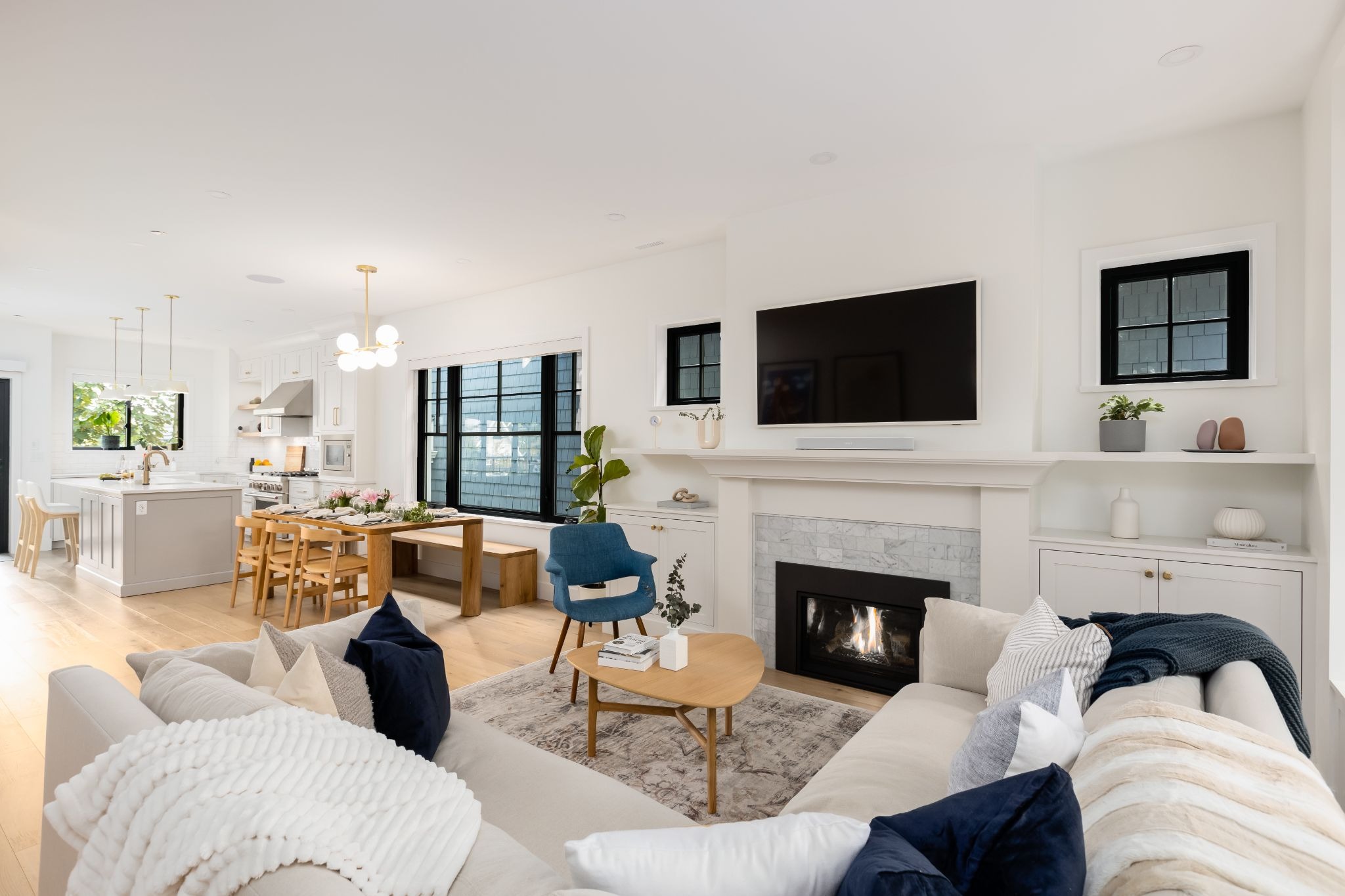
A well-ventilated open concept kitchen with a properly sized range hood to control steam and odours.
Range hoods and cooking smells
In a closed kitchen, a mediocre fan sometimes gets away with it. In an open plan, poor ventilation spreads steam and odours into your sofa cushions in a hurry. When we plan concept kitchens, we look at:
- Fan power and noise: Enough capture for your cooktop style, without a roar that drowns out conversation.
- Ducting: A properly sized, straight run to an exterior wall or roof, not a long maze of flex duct.
- Make‑up air: For stronger fans, your mechanical designer may recommend a way for fresh air to enter so you don’t depressurize the house.
Heating, cooling, and air distribution
When rooms merge, your original registers or baseboard heaters may no longer be in the right spots. Common adjustments include:
- Relocating or adding supply registers so warm and cool air is evenly distributed.
- Adjusting duct sizing and balancing so the new space doesn’t feel drafty or stuffy.
- Planning for future heat pumps or AC if you’re upgrading mechanical systems during the renovation.
In older homes, we sometimes recommend additional insulation, air sealing, or upgraded windows at the same time, so your new open concept doesn’t highlight every draft the original builder left behind.
Budget, timeline, and why design‑build helps
Homeowners often ask, “What does an open concept kitchen cost in Vancouver?” The honest answer: it depends heavily on structure, finishes, and whether other parts of the main floor are included.
How structure and services affect budget
Two projects with the same cabinet layout can land in very different budget ranges because of what’s hiding in the walls and floors. Cost drivers often include:
- Size and span of new beams and the engineering required.
- Whether new posts can land on existing footings or need new ones.
- How much plumbing and electrical must be rerouted to suit the new layout?
- Finish level: custom millwork, stone counters, integrated appliances, and specialty lighting packages.
Many full main‑floor reconfigurations with a new kitchen, open sightlines, and upgraded finishes land in the mid‑five to low six‑figure range, but we confirm a realistic budget only after design and trade input—not on a quick walk‑through.
Why work with a design‑build contractor for open concept projects
Open concept kitchen designs touch nearly every part of the house: structure, mechanical, finishes, even exterior windows and doors. That’s where a design‑build model earns its keep:
- One team from concept to warranty: Designers, project managers, carpenters, and trades working from the same set of drawings.
- Budget and design developed together: Layout, finishes, and structural choices are tested against your budget early instead of as an afterthought.
- Permit and inspection co‑ordination: You’re not left shuttling drawings between a designer, engineer, and separate contractor.
- Construction experience: Our carpenters and site leads have opened up dozens of Vancouver and Burnaby homes, so they know the typical surprises—and how to handle them calmly.
If you’d like to understand how this looks step‑by‑step, our home renovation services and custom home building services pages outline the full project lifecycle.
Next steps: talking through your concept kitchen with TQ Construction
Thinking about taking out that kitchen wall this year? A good first step is a conversation, not a demolition party. Bring your inspiration photos, the way your family actually uses the space, and your questions about structure, permits, and HVAC.
Our Burnaby‑based team has been re‑planning kitchens and main floors across Metro Vancouver since the mid‑1980s. We’re comfortable with character homes, post‑war houses, mid‑century layouts, and newer builds that need a smarter plan—not just new cabinets.
Start by exploring recent projects in our kitchen renovation gallery, then get in touch to talk through what’s possible in your home.
Ready to explore your own open concept kitchen?
Schedule a discovery call with our design‑build team to discuss layout options, structural feasibility, and a realistic budget range for your home.
Disclaimer: This article provides general information for homeowners in Vancouver and Burnaby and is not engineering, architectural, or legal advice. Structural changes, HVAC design, and permit requirements must be reviewed by qualified professionals and your local municipality for your specific property.