

.avif)


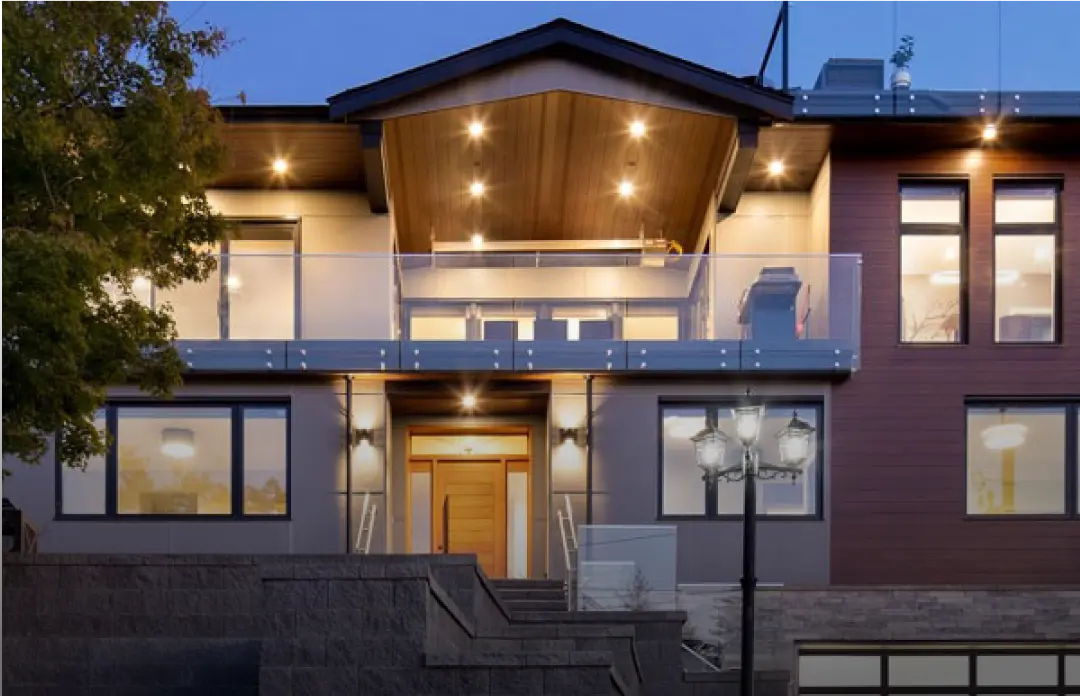
A modern custom home designed to feel warm and steady, even on wet West Coast days.
TL;DR: Must haves when building a custom home in Vancouver
When people ask us about must haves when building a custom home, they often expect a list of fixtures and finishes. Those matter, but in our climate the real “must haves” live inside the walls and in the way the home is put together. The decisions you make around insulation, air sealing, rainscreen details, and climate-ready design will decide whether your home feels calm and comfortable for decades, or drafty and damp long before it should.
- A high-performance building envelope with excellent insulation and airtightness.
- Proper rainscreen wall assemblies suited to Metro Vancouver’s heavy rainfall.
- Right-sized heat pump systems with balanced ventilation (HRV/ERV).
- Shading, glazing, and layout planned for future heat waves and wildfire smoke.
- A design-build team that understands BC Energy Step Code and local bylaws.
If you’d like help turning these into a clear plan, our design-build process walks you through each decision step by step.
Why energy efficiency is the backbone of a custom home
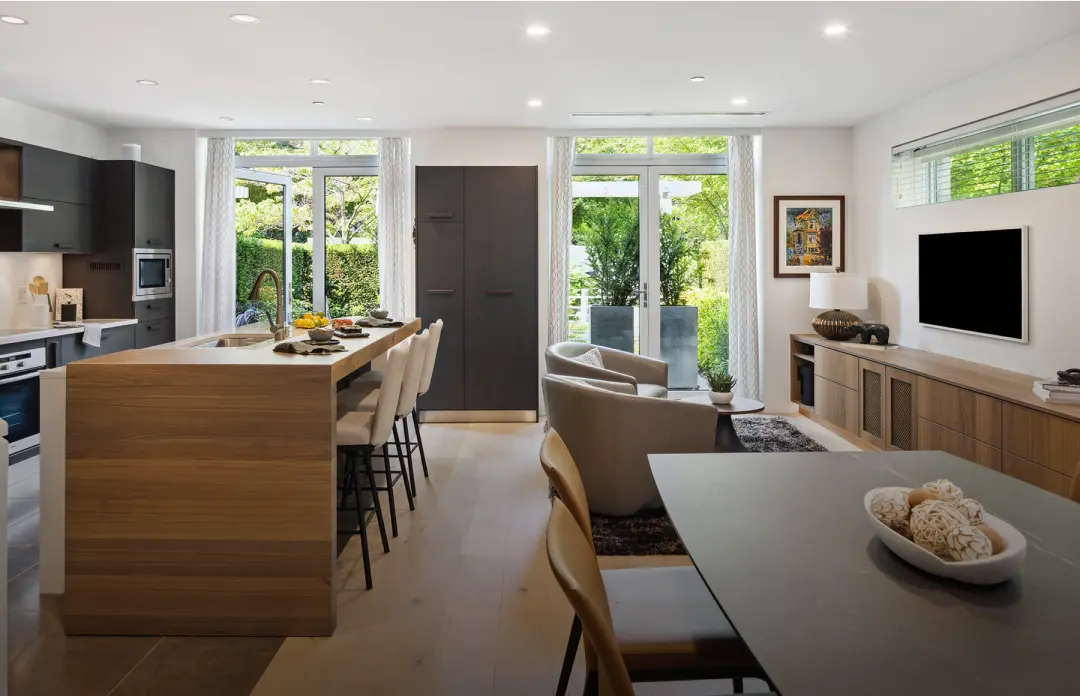
Picture a winter evening in East Vancouver. It’s pouring outside, the heat is on low, and your home still feels warm and quiet. That feeling doesn’t come from a fancy thermostat. It comes from good building science baked into the design from day one.

A well-insulated, airtight custom home envelope keeps living spaces warm and quiet on rainy winter evenings.
In BC, the Energy Step Code is steadily raising the bar for new homes. For homeowners, that’s good news. A well-insulated, airtight home uses far less energy, has fewer drafts, and handles moisture more gracefully. Getting there starts with the envelope.
Start with the building envelope, not the fixtures
The building envelope is everything that separates inside from outside: walls, roof, slab, windows, and doors. For most of our custom home projects, we focus on three things:
- Continuous insulation that meets or exceeds Step Code targets for your municipality.
- High-performance windows with the right coatings and frames for our wet, coastal climate.
- A continuous air barrier that treats air leaks like the comfort and durability problem they are.
A simple rule we share with clients: target a “coat first, sweater second” strategy. In other words, design the shell of the home to hold comfort in, then use your mechanical systems as a fine-tuning tool rather than a bandage.
Heat pumps, ventilation, and right-sized systems
Once the envelope is efficient, the mechanical systems can be smaller, quieter, and more comfortable to live with. In the Lower Mainland, that usually means:
- A cold-climate air-source heat pump for heating and cooling.
- An HRV or ERV (heat or energy recovery ventilator) to provide fresh, filtered air.
- Thoughtful duct design so bedrooms, basements, and top floors all stay within a narrow temperature range.
Natural Resources Canada has a helpful overview of home energy efficiency upgrades, and the same principles apply when you’re starting from scratch. The difference with a custom home is that we can hide the “guts” neatly and coordinate them with your architectural vision right from the start.
Rainscreen details: keeping Vancouver rain on the right side of the wall
In Metro Vancouver, it doesn’t matter how beautiful your siding is if the rain gets trapped behind it. That’s where rainscreen assemblies come in. They’re not flashy, but they’re one of the main reasons some homes are still performing beautifully 20+ years later.
What a rainscreen wall actually does
A rainscreen is a small, ventilated gap between your cladding and the sheathing of the home. That gap gives water a way out and air a way through. The basic stack looks like this:
- Interior drywall and finishes.
- Framing with insulation.
- Sheathing and a well-detailed weather barrier (housewrap or membrane).
- Vertical strapping or clips to create an air space.
- Exterior cladding such as fiber cement, metal, or wood.
.avif)
Rainscreen assemblies use an air gap and weather barrier behind the cladding to let trapped moisture drain and dry.
When we walk clients through wall sections during the planning stage, the light bulb goes on: the siding is mostly about appearance, while the rainscreen and weather barrier are about keeping the structure healthy for the long haul.
Key rainscreen decisions during design
During early design meetings, we help you make clear choices about:
- Cladding type (wood, fiber cement, stucco, metal) and how that affects drainage and maintenance.
- Overhangs and flashing around windows, doors, and decks, which greatly reduce the load on walls.
- Transitions at balconies, planters, and roof edges, so water doesn’t sneak in at weak points.
The City of Vancouver green building guidelines expect higher performance from new homes than they did even a decade ago. A properly detailed rainscreen helps your home meet those expectations while quietly doing its job year after year.
Climate-ready design for heat, smoke, and storms
Anyone who lived through recent heat domes or wildfire smoke in BC knows that “Vancouver is mild” is starting to feel like an old story. Custom homes planned today need to handle bigger swings in temperature and air quality than the homes many of us grew up in.
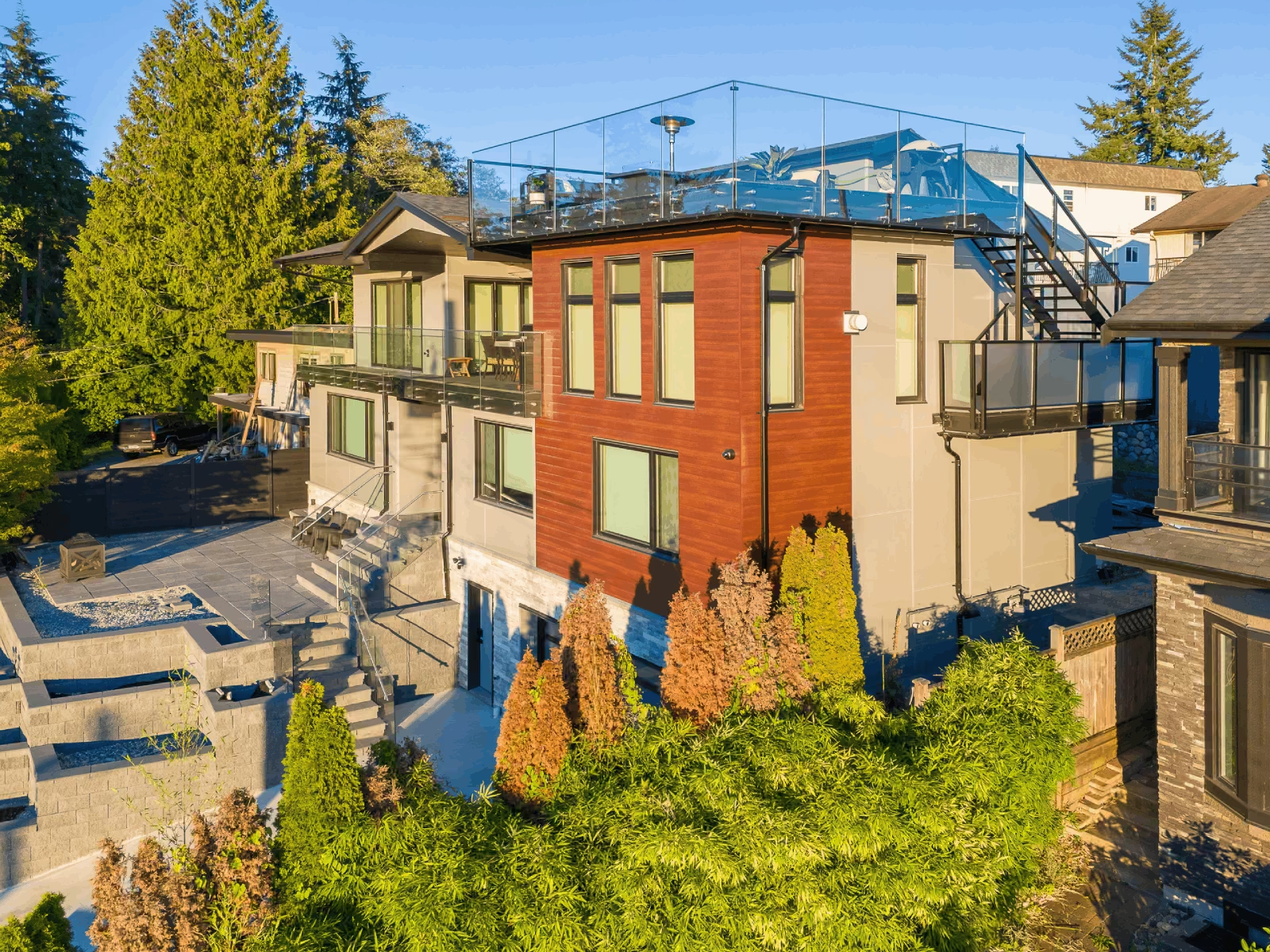
Climate-ready custom homes use shading, glazing, and smart layout to stay comfortable during heat waves and smoke events.
Keeping your home comfortable during heat waves
When we talk about climate-ready design, we’re talking about simple, durable choices that keep your home livable when the weather gets weird. For heat, that usually means:
- Orientation and glazing that bring in winter sun but limit summer overheating.
- Exterior shading where west and south windows see intense sun.
- Continuous insulation and airtightness so your heat pump doesn’t have to work overtime.
On several recent custom home builds and major renovations, we’ve modeled summer performance early in design. That gives homeowners confidence that the home will stay comfortable on those rare but memorable scorching days.
Fresh air when the outside air is smoky
Smoke events have become a regular part of BC summers. Opening the windows is not always the best idea, so the home itself needs to manage air quality. Climate-ready homes in our region should include:
- A dedicated ventilation system with filtration (usually an HRV/ERV with upgraded filters).
- Well-sealed envelopes so smoky air doesn’t sneak in through gaps and cracks.
- Thoughtful room-by-room supply and return locations to keep bedrooms feeling fresh.
A simple way to think about it: your home should breathe through planned, filtered pathways, not through hundreds of tiny holes you never see.
Checklist: must-have details to discuss with your builder
Wondering what to bring up in early design meetings? Here’s a practical checklist to keep the conversation grounded in performance as well as style.
Questions to ask your designer or builder
- Envelope performance: “What Energy Step Code level will our home meet, and how are you planning the wall and roof assemblies to get us there?”
- Rainscreen strategy: “Can you show us the rainscreen details around tricky areas like balconies and window heads?”
- Moisture management: “How will this design handle bulk water, vapour, and air leaks over time?”
- Mechanical design: “Who is designing and sizing the heat pump and ventilation system, and will we see load calculations?”
- Climate-ready choices: “What are we doing for shading, summer comfort, and smoke events?”
Red flags during pricing and construction
Over the years, we’ve been called in to help on projects where early decisions created headaches later. A few signals that deserve a second look:
- Pricing that treats insulation, air sealing, and rainscreen details as “nice to have extras” rather than core parts of the build.
- Mechanical systems chosen from a catalogue without reference to the actual envelope design or Step Code requirements.
- Little or no discussion of moisture management, especially at balconies, roofs, and below-grade spaces.
If something in the proposal doesn’t sit right, ask for a walk-through. A good design-build team should be able to explain, in plain language, how your home will handle energy, water, and air from the foundation up. That’s how we approach every project, whether it’s a deep renovation or a full custom build.
How TQ Construction builds energy-smart, durable homes
Since the mid-1980s, we’ve worked on homes across Vancouver and Burnaby that have to stand up to steady rain, salty air, and changing building codes. That history turned into a few habits we carry into every custom home project:
- Energy and durability baked into the concept: We talk Step Code targets, wall assemblies, and mechanical strategies in the same breath as layout and style.
- Detailing that respects our climate: From rainscreen gaps to deck membranes, we lean on proven assemblies that work in the Lower Mainland.
- Integrated design-build team: Designers, project managers, and carpenters work together so details on paper match what gets built on site.
“The best compliment we get isn’t about a light fixture. It’s when a homeowner tells us their new place just feels steady and comfortable, no matter what the weather is doing.”
You can see how this plays out in practice in our project gallery, where many homes started as simple ideas about comfort and longevity and grew into award-winning designs.
Next steps for your custom home project
If you’re in the early stages of planning a custom home in Vancouver or Metro Vancouver, this is the perfect moment to lock in the must-have details: energy efficiency, rainscreen assemblies, and climate-ready comfort. Those decisions shape everything that follows.
During our initial consultations, we often sketch a rough “section through your future home” and walk you through how each layer works. Clients tell us that conversation makes the rest of the choices feel far less overwhelming.
If that sounds helpful, we’d be glad to meet, review your goals, and see whether our team is the right fit.