

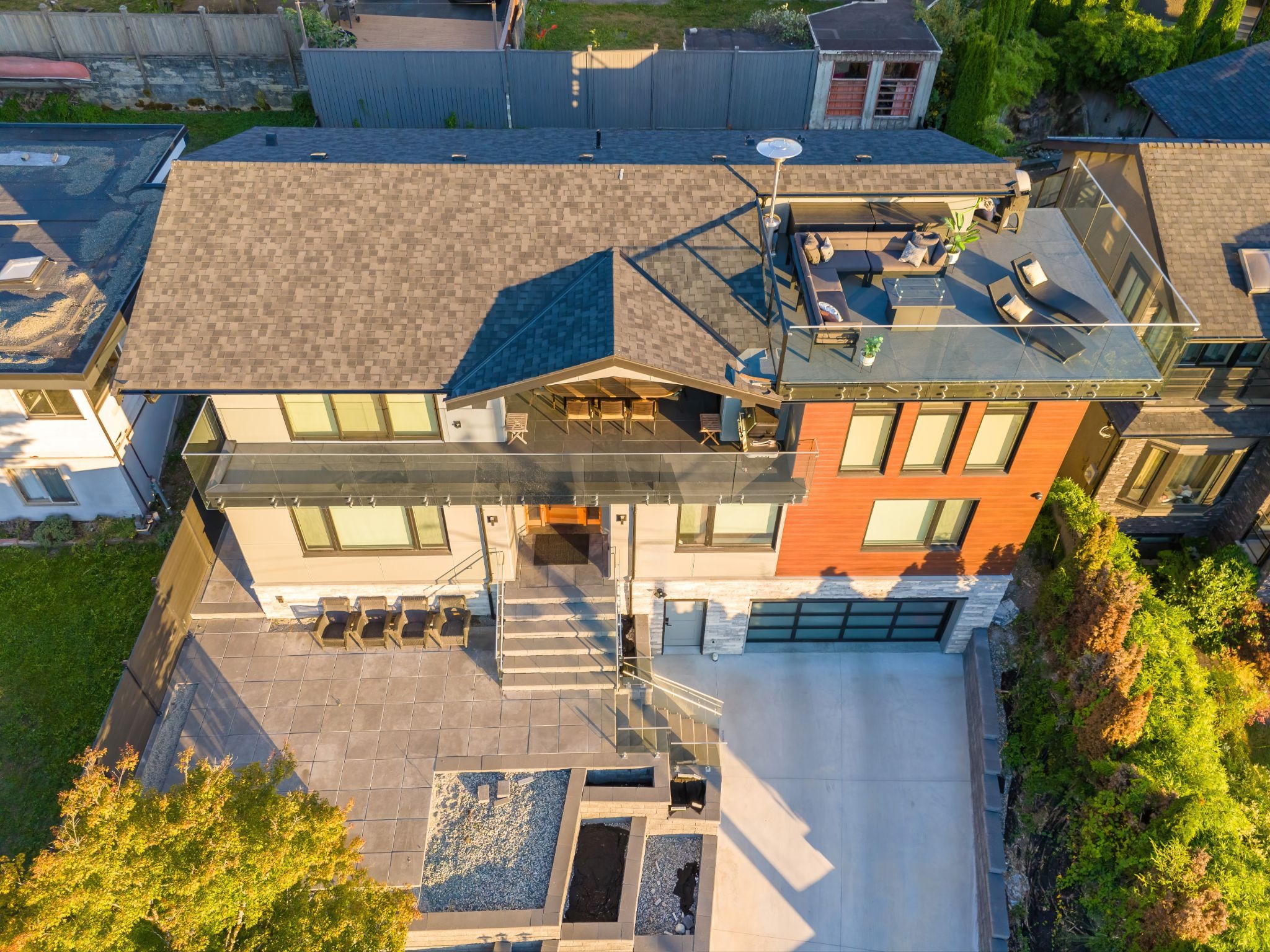
A compact laneway home tucked behind a primary house can create flexible living or rental space in your backyard.
Thinking about adding a small home in your backyard, but not sure where to start or who to call first? You’re not alone. For many Greater Vancouver homeowners, the idea starts with a parent who wants to age close to family, an adult child who needs a foothold in the city, or a mortgage that would feel a lot lighter with steady rental income.
The challenge isn’t the dream; it’s the sequence. What happens after that first phone call? Who handles zoning questions, surveys, permits, design, and construction—and in what order?
This roadmap walks you through a typical laneway house project with TQ Construction, from the very first feasibility chat to move‑in day.
TL;DR: Your laneway home in 6 key phases
- Phase 1 – Feasibility call: Quick check on zoning, site constraints, high‑level budget, and goals.
- Phase 2 – Site review & concept design: Survey, early layout options, and a realistic project path.
- Phase 3 – Detailed design & permits: Architecture, engineering, energy code, and full permit package.
- Phase 4 – Pre‑construction: Final pricing, schedule, selections, and neighbour communication.
- Phase 5 – Construction: Services, foundation, framing, finishing, and all inspections.
- Phase 6 – Move‑in & warranty: Deficiency walk‑through, handover, and ongoing support.
From first call to move‑in, most Greater Vancouver lane way homes take roughly 12–24 months, depending on your municipality, site conditions, and design choices.
What a laneway project really looks like (big picture)
In Vancouver, Burnaby, and neighbouring cities, laneway homes (sometimes written as lane way homes) are treated as full houses under the building code. They’re compact, but they still need proper foundations, services, insulation, structure, and life‑safety systems.
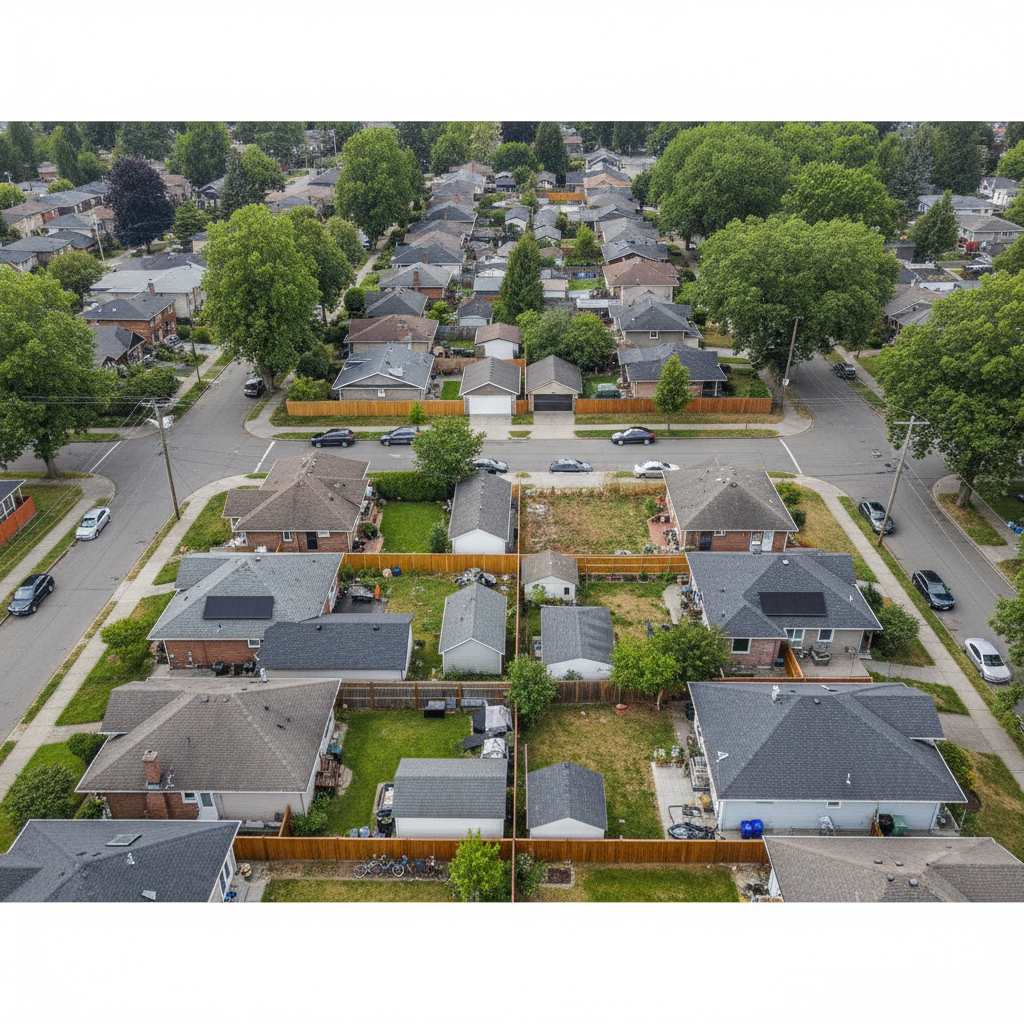
Laneway and coach houses fit into existing residential blocks, adding gentle density behind primary homes.
That means the process has more in common with a small custom home build than with a quick renovation—but with a clear, well‑sequenced plan it stays manageable.
At TQ Construction, our design‑build process for laneway projects follows six stages: discovery and feasibility, planning and surveys, detailed design and permits, pre‑construction, construction, and warranty and support. Throughout, you work with one integrated team instead of juggling a separate architect, builder, and permit consultant.
Common laneway project bottlenecks (and how this roadmap reduces risk)
Even with a clear six‑phase roadmap, a few predictable issues tend to slow laneway projects across Greater Vancouver. Planning for them early keeps your schedule and budget on track.
Incomplete surveys and missing technical reports
Delays often start with outdated surveys or missing arborist, geotechnical, or energy‑modelling reports. In Phases 2 and 3 we confirm what your municipality requires and coordinate those items before permit submission.
Under‑specified services and required upgrades
Water, sewer, power, and gas capacity are easy to underestimate. During feasibility, design, and pre‑construction we review existing services, flag likely upgrades, and build them into your pricing and schedule up front.
Neighbour access and lane constraints
Tight lanes, limited storage, and shared access with neighbours can slow deliveries and inspections. In Phases 2 and 4 we plan access routes, staging areas, and neighbour communication so work can move ahead smoothly.
Scope creep and late decision‑making
Small design changes or slow product decisions can look harmless but add weeks to permitting, pricing, or construction. Structured design meetings and a documented selections process in Phases 3 and 4 help lock in key choices before crews are on site.
The City of Vancouver’s overview of building a new house or laneway house shows how complete information helps projects move through review more smoothly.
Phase 1: The first feasibility call
What we cover on that first call
That first conversation quickly answers, “Is this worth pursuing?” You just need your lot address and a general sense of your goals.
On a typical call, we’ll:
- Confirm your municipality and zoning and whether laneway homes or detached accessory dwelling units (ADUs) are allowed in principle.
- Talk about who the home is for (family, rental, aging in place, future resale flexibility).
- Discuss ballpark budget ranges and typical timelines for your city.
- Flag any obvious red flags: steep slopes, irregular lots, large trees, or tricky access.
This mirrors the start of our renovation and custom build process for larger projects: confirming fit before anyone commits to detailed design.
In Vancouver, for example, most low‑density zones now support laneway houses, with rules about maximum floor area and height. The City’s housing options and laneway house guide is a helpful reference, and we use tools like this behind the scenes when we review your property.
What you walk away with
By the end of the call, you should have:
- A yes/no on basic feasibility.
- A realistic starting budget range and order‑of‑magnitude timeline.
- Clarity on next steps: usually a site visit and formal feasibility review.
If the fit looks good, we’ll invite you to continue through the same sequenced process we use for custom home building across Metro Vancouver—adapted specifically for laneway homes.
Phase 2: Site review, survey, and concept design
On‑site walk‑through and zoning reality check
This is where we roll up our sleeves. A designer or project manager meets you on site to confirm:
- How vehicles and people would access the laneway home.
- Existing structures (garages, sheds) that may need removal.
- Rough building “envelope” based on lot size, setbacks, and separation from the main house.
For Burnaby homeowners, we’ll also reference the city’s laneway homes information so we’re consistent with their evolving small‑scale housing rules.
Survey and early concept options
A current site survey is essential. It gives us accurate measurements, grades, and locations of structures and utilities. With that in place, we can sketch early options such as:
- One‑bedroom vs. two‑bedroom layouts.
- Two‑storey vs. single‑level living for accessibility.
- How to protect privacy between main house and laneway home.
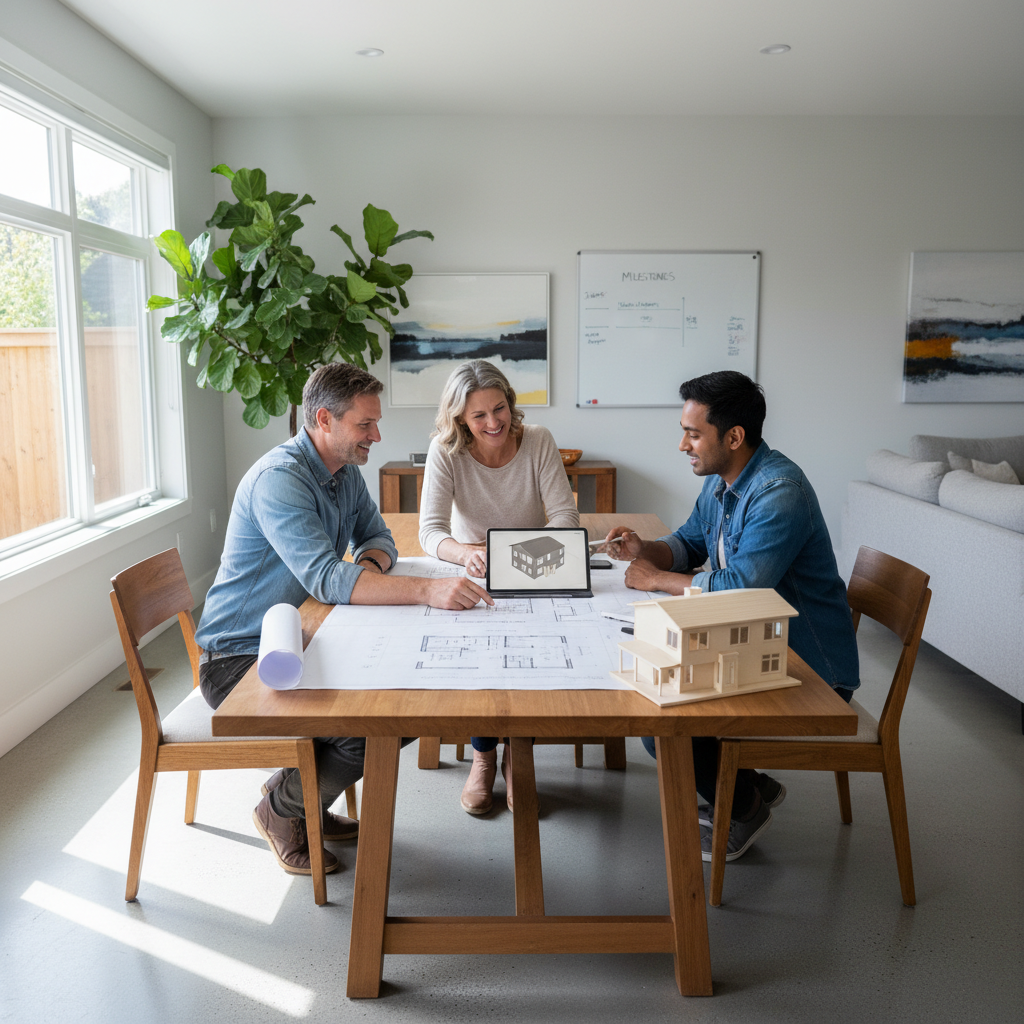
Early planning meetings connect zoning rules, site constraints, and your goals into a workable laneway house concept.
At this stage homeowners can really see how the laneway home will work in the yard, and we start refining the budget based on the emerging concept and your preferred finishes.
Phase 3: Detailed design, engineering, and permits
From sketches to permit‑ready drawings
Once you’re happy with the concept, we develop full drawings and specifications. This typically includes:
- Architectural plans, elevations, and sections.
- Structural engineering for foundations and framing.
- Energy modelling to meet BC Energy Step Code requirements.
- Code reviews for stairs, fire separation, egress, and accessibility.
Laneway houses in Vancouver, for instance, are capped at a percentage of lot area (currently up to 0.25 floor‑space ratio and a maximum floor area published by the City). Our team designs within those limits so your permit reviewers have fewer reasons to push back.
Building permit application
With drawings, forms, and supporting documents assembled, we submit your permit package to the city. In Vancouver, this often includes supporting materials referenced in the City’s Low Density Housing Options How‑to Guide. In other municipalities, requirements vary, but the principle is the same: complete, coordinated information reduces delays.
During this phase, TQ manages questions from the city, coordinates any required revisions, and keeps you updated on progress—so you’re not stuck refreshing permit status pages on your own.
Phase 4: Pre‑construction, pricing, and schedule
Locking in numbers and details
Once we’re confident your permit is on track, we move into detailed pre‑construction planning. Together, we will:
- Finalize interior and exterior specifications (windows, siding, flooring, cabinets, fixtures).
- Confirm how the laneway home will connect to water, sewer, power, and gas.
- Review a detailed construction estimate, based on current trades and material pricing.
Because TQ is a full‑service design‑build company, the same team that drew your plans is coordinating with the people who will actually build them. That reduces surprises once you’re under construction.
Construction schedule and neighbour communication
Laneway homes bring activity into back lanes, so a bit of neighbour diplomacy goes a long way. Before work starts, we’ll map out:
- Staging and access points for crews and deliveries.
- Typical working hours and phases of higher noise.
- Approximate start and completion dates.
Many clients share a simple “what to expect” note with adjacent neighbours—we can help with wording based on decades of experience building in established Vancouver neighbourhoods.
Phase 5: Construction, inspections, and check‑ins
Groundwork to lock‑up
On site, work starts with excavation, services, and foundations, then moves through framing, roofing, windows, and doors. By “lock‑up,” your laneway home is weather‑tight and secure.
Throughout, we coordinate required inspections with your municipality and ensure the work aligns with both the engineered plans and local bylaws. Your project manager remains your single point of contact.
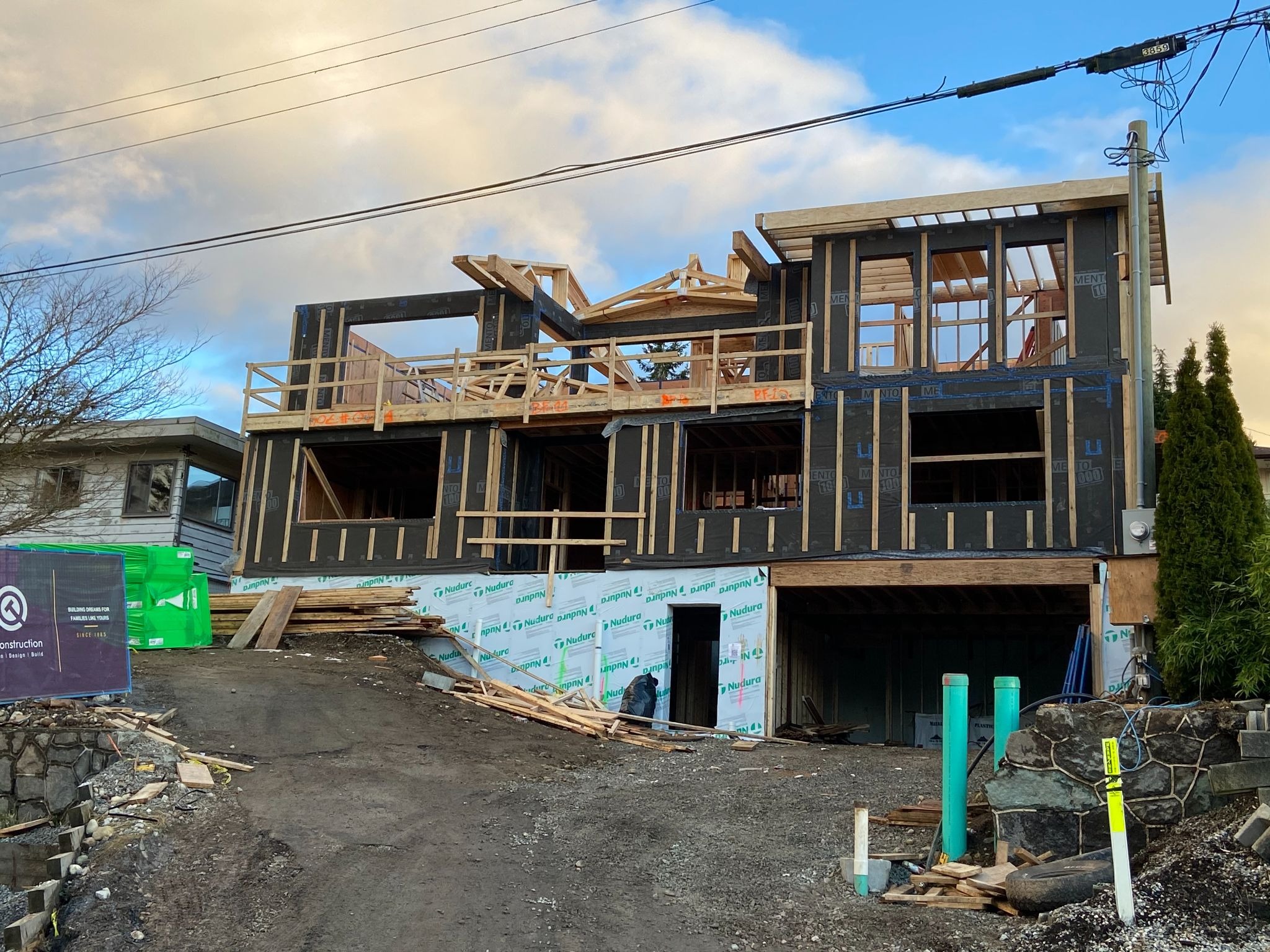
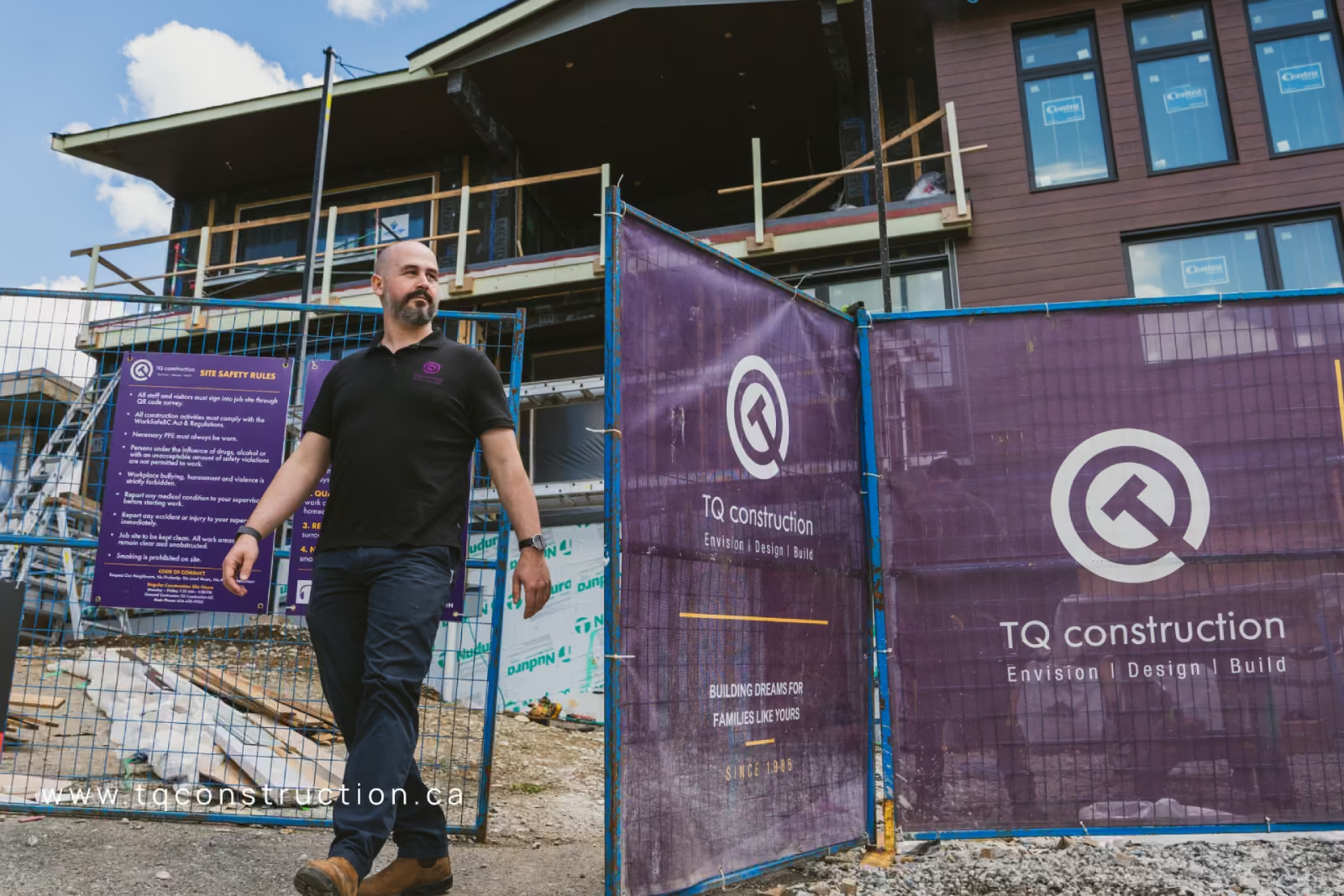
The construction phase of a laneway house project roadmap moves from foundations and framing through to a weather‑tight structure.
Finishing and quality checks
Once the structure is in place, the focus shifts to:
- Plumbing, electrical, and HVAC rough‑ins and finishes.
- Insulation and air‑sealing to meet or exceed Step Code targets.
- Interior finishes: drywall, paint, flooring, millwork, tile, and fixtures.
Regular walk‑throughs with you help confirm details such as storage, lighting, and accessibility.
Phase 6: Move‑in, warranty, and long‑term care
Final inspection and occupancy
Near the end of construction, we do a detailed deficiency walk‑through with you, create a punch list, and complete any outstanding items. The city’s final inspection and occupancy approval clear the way for move‑in.
Living with your laneway home
You’ll receive a turnover package outlining:
- Appliance manuals and warranties.
- Paint colours and finish schedules.
- Maintenance tips to keep systems running well.
TQ’s warranty coverage continues after move‑in. If questions or concerns come up, you’re not left hunting for trades—we remain your point of contact, just as we do on our larger whole‑home renovations and custom builds.
How long does a laneway house project take?
Every property and municipality is different, but for Greater Vancouver homeowners a realistic, high‑level timeline looks like this:
- Feasibility, site review, and concept design: ~1–3 months
- Detailed design, engineering, and permits: ~4–9+ months, depending on the city and permit backlogs
- Pre‑construction and selections: ~1–2 months (often overlapping with late‑stage permitting)
- Construction to move‑in: ~6–9 months, influenced by weather, site access, and scope
If you’re still in the “just curious” stage, it can be helpful to read broader resources like BC’s Home Suite Home guide to accessory dwelling units. Then, when you’re ready, a short feasibility chat will connect that general information to your specific lot.
Is a laneway home right for your property?
Laneway homes are not the only way to add space or flexibility. Sometimes a rear addition or full home reconfiguration makes more sense. The right answer depends on:
- Your lot size, lane access, and zoning.
- Who will live in the new space, and for how long.
- Whether rental income is a key part of your plan.
- Your appetite for a ground‑up build versus working within your existing footprint.
The upside of working with a design‑build team that also handles whole‑home renovations and additions is perspective. We can compare a laneway house with other options and recommend what best fits your property, budget, and long‑term plans.
If you’d like a calm, straightforward starting point, reach out for a no‑pressure feasibility conversation. We’ll talk through what’s possible on your lot, how the process works, and whether now is the right time to take the next step.
Laneway house FAQs
Still have questions? Here are quick answers to a couple we hear often from Greater Vancouver homeowners.
Do I need separate companies for design and construction of my laneway home?
No. TQ Construction works as a full‑service design‑build team, so the same people who plan your laneway home also prepare permits and manage construction, which reduces handoffs and miscommunication between drawings and on‑site work.
How early should I start planning if I have a target move‑in date?
Because most laneway homes take roughly 12–24 months from first feasibility call to move‑in, it is wise to start planning at least a year in advance. If your site is complex or you have a fixed date in mind, starting even earlier gives more room to solve issues without rushing.
Summary / Key takeaways
- A typical Greater Vancouver laneway home follows six clear phases: feasibility, site review and survey, detailed design and permits, pre‑construction, construction, and move‑in with warranty support.
- Adding up those phases, most laneway homes take about 12–24 months from first call to move‑in, depending on municipality, site conditions, and design choices.
- If you have a target move‑in date, start planning at least 12 months in advance—earlier for complex sites or firm deadlines.
- Working with a single design‑build team that also handles whole‑home renovations and custom builds reduces handoffs, keeps drawings and construction aligned, and gives you one point of contact throughout.