

If your Richmond home feels chilly around the ankles in January and stuffy by May, chances are your insulation is telling you something. And once you start searching for “insulation contractors Richmond” the sheer number of options can feel like one more project on the list.

A well-insulated home in a mild coastal climate stays comfortable and efficient year-round.
Insulation work is hidden behind drywall and in crawlspaces, so you only discover bad work years later—in the form of high bills, cold rooms, condensation, or even mould. The right contractor, on the other hand, can quietly make your home more comfortable, quieter, and less expensive to heat for decades.
This guide walks you through how to check a contractor’s experience, the materials they recommend, how they handle Richmond permits and BC codes, and what their warranties really mean—drawing on what we’ve learned coordinating insulation on whole-home renovations across Greater Vancouver, including many projects in and around Richmond.
TL;DR: Quick checklist
- Shortlist 2–3 Richmond-based contractors with solid reviews and recent projects similar to your home.
- Confirm they are licensed, insured, and comfortable working with the City of Richmond’s Home Building & Renovation Guide permit and inspection process.
- Ask how many years they’ve specialised in insulation and how they train their crews.
- Have them explain which materials they recommend (fibreglass, cellulose, spray foam, rigid board, mineral wool) and why those suit Richmond’s damp, coastal climate.
- Request a detailed written quote with R-values, square footage, prep work, ventilation details, and cleanup—not just a single lump-sum number.
- Talk through both product warranties and workmanship warranties, plus how they handle issues like settling, condensation, or pest damage.
- Ask whether their work can help you qualify for FortisBC or CleanBC insulation rebates and whether they belong to the Home Performance Contractor Network; you can also review the latest FortisBC insulation rebate details yourself.
Why insulation quality matters in Richmond
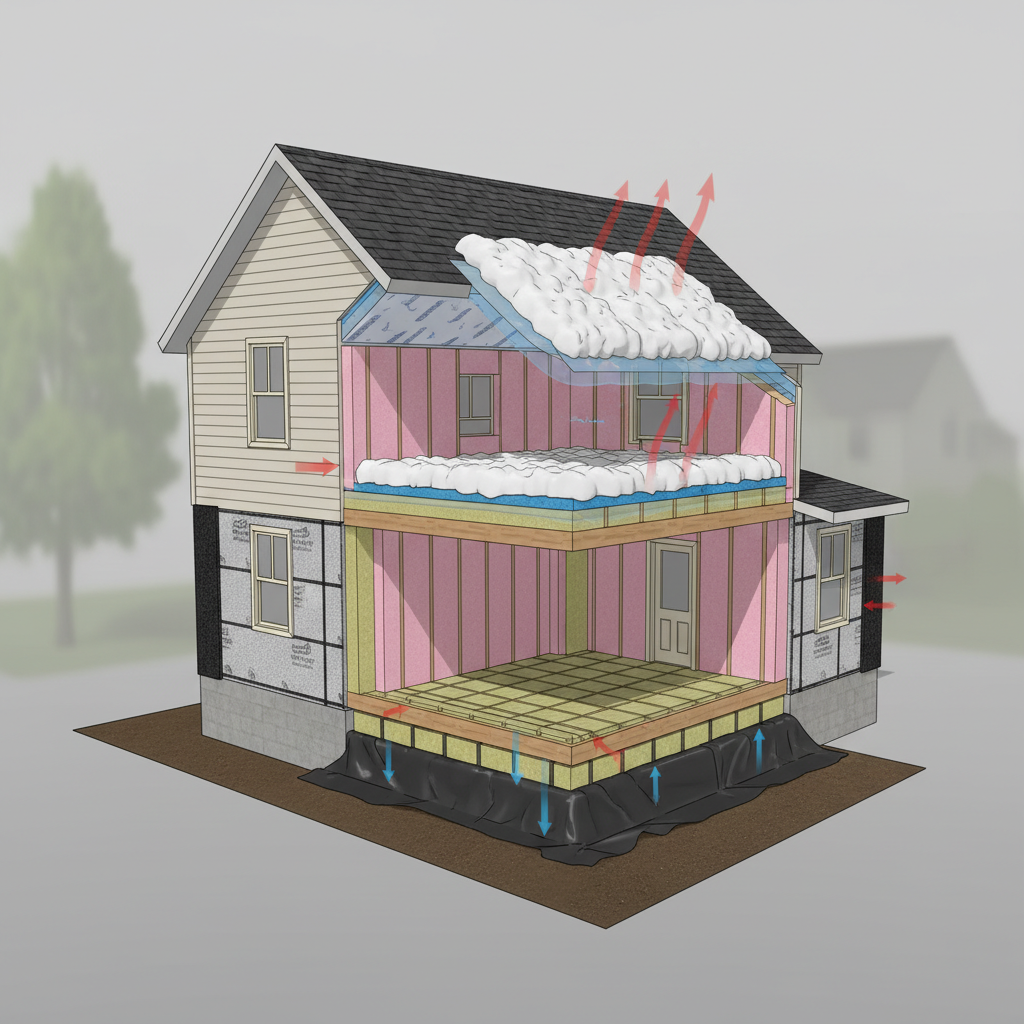
Proper insulation and air-sealing in the attic, walls, and crawlspace help control heat loss and moisture in Richmond’s damp climate.
Space heating accounts for roughly two-thirds of energy use in the average Canadian home, according to Natural Resources Canada. In Richmond’s mild but damp climate, weak insulation and air-sealing don’t just waste energy; they show up as cold floors, condensation on windows, and musty rooms.
Two local factors raise the stakes:
- Moisture and air leakage. Our marine climate brings cool, moist air. Without good air-sealing and vapour control, warm indoor air can leak into wall cavities and roof assemblies, where it condenses.
- BC Building Code and Energy Step Code. New builds and many significant renovations must now meet performance-based energy targets, not just minimum wall and attic R-values, under the BC Energy Step Code. That makes careful insulation and air-sealing essential.
Done properly, upgraded insulation can even out room temperatures, keep basements drier year-round, and support lower heating bills long after the crew has left.
If you’re planning insulation as part of a larger renovation or addition, it’s worth pairing this work with a sequenced whole-home renovation plan so you’re not opening the same walls twice.
Richmond Insulation Contractor Vetting Checklist
Use the five steps below to shortlist, vet, compare, and choose an insulation contractor for your Richmond, BC home with more confidence.
Step 1 – Shortlist Richmond insulation contractors
Rather than calling the first name that pops up in a search ad, put together a short, focused list. Aim for two or three contractors who:
- Regularly work in Richmond and understand local housing styles (1970s split-levels, older cottages, newer townhomes).
- Show clear photos and project descriptions on their website—especially attics, crawlspaces and wall retrofits.
- Have recent, detailed reviews that mention professionalism, cleanliness and long-term comfort, not just “job done fast.”
- Can share at least two local references for similar insulation upgrades.
For larger renovations, consider working with a design-build contractor who manages specialty insulation trades for you. That way, the person specifying R-values, air-sealing strategy and ventilation is the same team responsible for meeting code and comfort goals.
If you’re still deciding what kind of renovation partner you need, you may find our article on building your dream design-build team helpful as you compare options.
Bonus question while shortlisting: do they mention experience with FortisBC or CleanBC rebate programs or the Home Performance Contractor Network on their site? That’s a good sign they keep up with current standards and paperwork; you can cross-check details on the FortisBC insulation rebates page.
Step 2 – Vet experience, licences and training
How do I know if an insulation contractor has the right experience?
On your first call or site visit, you can learn a lot with a few straightforward questions:
- “How long have you specialised in insulation?”
Look for several years of focused experience, not a contractor who only occasionally adds insulation between other jobs. - “What percentage of your work is retrofits versus new homes?”
Richmond has plenty of older homes. Retrofits demand problem-solving around existing framing, wiring and previous DIY work. - “Who will be in my home on installation day?”
Ideally, you’re meeting the project lead who will actually be on site, not just a salesperson.
Licences, insurance and Richmond permits
Next, move into the practical protection questions:
- Business licence and insurance. Ask for proof of liability insurance and workers’ compensation coverage.
- Permits and inspections. Some insulation work is part of a larger building permit, especially when you’re reframing or changing the building envelope. A seasoned contractor should be comfortable working with the City of Richmond’s Home Building & Renovation Guide and inspection system.
- Training and certifications. Ask what training they have on BC Building Code, air-barrier details, and manufacturer-specific installation. Membership in recognised industry networks can be one sign they take ongoing education seriously; for example, resources like the BOABC Step Code handbook for building officials highlight best practices.
As a design-build firm, we’re big believers in seeing this stage as a two-way interview. Contractors who welcome detailed questions and answer them calmly tend to be the same ones who communicate well when a surprise shows up behind your drywall.
If your insulation is part of a larger renovation, bring these questions to your initial home renovation consultation so your general contractor can factor them into the overall scope.
Step 3 – Compare insulation materials and methods
Common insulation options for Richmond homes
You don’t need to become an engineer, but you should understand the basics of what might go into your walls and attic. Ask the contractor to walk you through the pros and cons of:
- Fibreglass batts – Common and cost-effective for open framing when cut and fitted properly.
- Blown-in cellulose – Useful for topping up attics and dense-packing existing wall cavities.
- Spray foam – High R-value and strong air-sealing; needs careful design and installation in our climate.
- Rigid foam board – Provides continuous exterior insulation during major renovations or additions.
- Mineral wool (rockwool) – Adds fire and sound resistance, ideal for party walls and mechanical rooms.
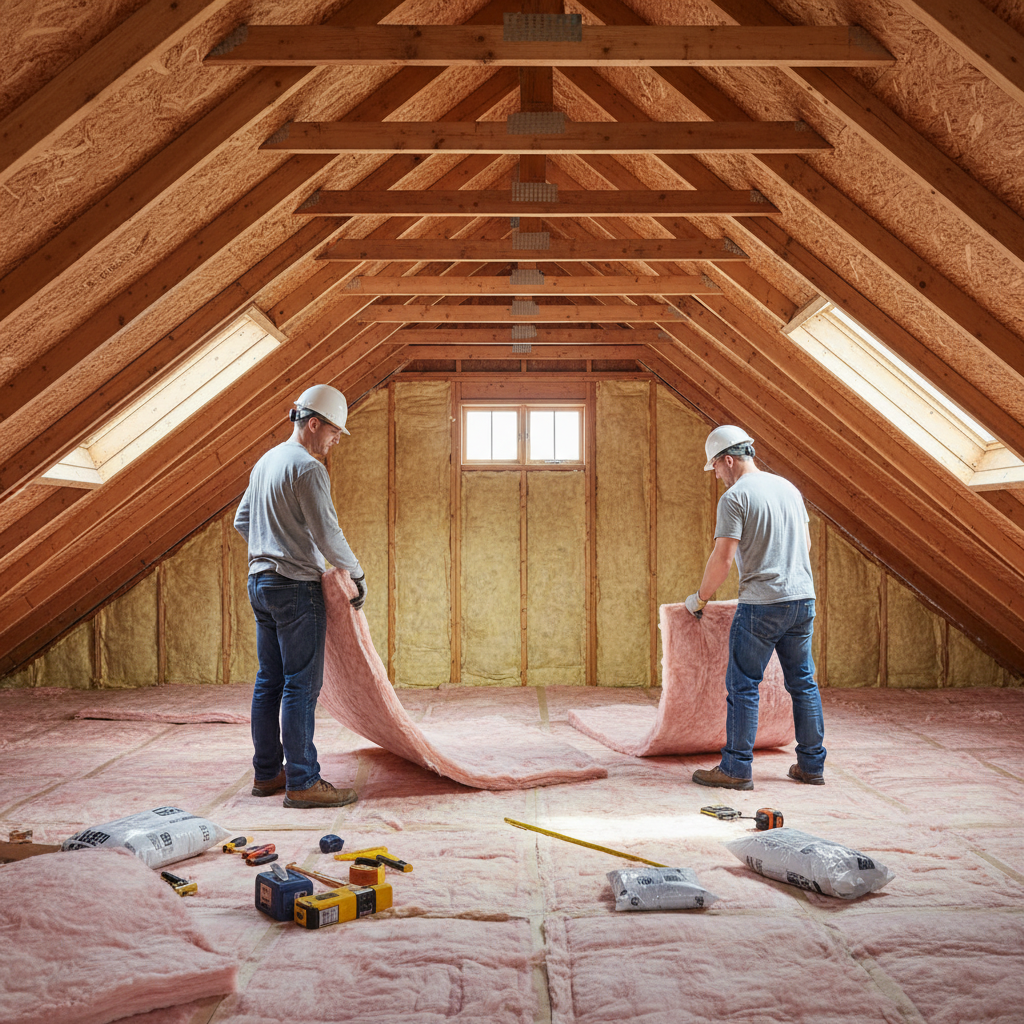
Experienced insulation contractors carefully install and fit batts to maximise performance in your attic.
As you compare options, listen for how they explain R-value (insulation level), air sealing (stopping drafts and heat loss), and vapour control (keeping moisture out of wall and roof assemblies in our damp climate).
Contractors who work regularly with BC’s Energy Step Code will usually talk about the whole building envelope—walls, roof, windows and air tightness—rather than treating insulation as a one-off upgrade.
Health, safety and indoor air quality
For any material they suggest, ask:
- How will you protect my family and pets during installation?
- What dust, fumes or off-gassing should I expect, and for how long?
- Do I need to be out of the house during certain stages?
- How will you keep soffit and roof vents clear so my attic can still breathe?
On larger projects, we often pair insulation upgrades with new ventilation strategies as part of a broader energy-efficient renovation plan, so indoor air stays fresh as the building envelope tightens up.
Step 4 – Quotes, rebates and real value
What should be in a detailed insulation quote?
A clear quote protects both you and the contractor. Before you sign anything, check that the proposal includes:
- Exact areas to be insulated (attic, crawlspace, basement walls, exterior walls) with square footage.
- Existing and target R-values for each area.
- Type, brand and thickness of insulation products.
- Air-sealing work (caulking, foam, weatherstripping, sealing around penetrations).
- Preparation and repairs (baffles, venting, minor framing adjustments).
- Handling of existing insulation (leaving, topping up, safe removal and disposal).
- Timeline, site access, and cleanup expectations.
- All fees, taxes and any allowance for unforeseen conditions.

Review quotes, rebates and scope with your insulation contractor so you understand the full value of the work.
Instead of just comparing bottom-line totals, compare the scope line-by-line. A slightly higher quote that includes robust air-sealing, proper ventilation and documented warranties usually delivers better long-term comfort and efficiency than the cheapest option.
Insulation rebates for Richmond homeowners
Utility and government programs change over time, but two programs Richmond homeowners often look at are:
- FortisBC insulation rebates. Incentives are typically based on how much R-value you add in different parts of the home, and usually require installation by a Home Performance Contractor Network member following recognised best practices; see the current FortisBC insulation rebate terms for details.
- CleanBC / provincial incentives. Provincial programs and partner offers encourage going beyond basic code requirements, sometimes tying rebates to overall energy performance rather than individual components. You can see examples in the BC insulation incentives list compiled by NAIMA Canada.
Ask each contractor which rebates might apply to your project, whether they’re approved for those programs, and what timelines or pre-approval steps you need to know about before work starts.
For a broader overview of programs that can apply to many renovation projects, you can also read our Vancouver home rebates guide.
If your insulation upgrade is tied to a larger renovation, your design-build team can help stage the work and documentation so that building permits, energy modelling, and rebate requirements line up from the start.
Step 5 – Warranties, after-care and red flags
Understanding insulation warranties
There are usually two layers of protection:
- Product warranties. Offered by the insulation manufacturer for defects in the material itself.
- Workmanship warranties. Offered by the contractor for how the material was installed.
Ask for both in writing and read the fine print on:
- Warranty length for each part of the work.
- What counts as a defect or failure.
- Who pays for labour if material replacement is needed.
- How to file a claim and typical response times.
Good contractors will also talk through how insulation interacts with ventilation, vapour control and future renovations, so today’s upgrade doesn’t conflict with tomorrow’s plans.
Signs a contractor may not be the right fit
During your conversations, watch for behaviours such as:
- Reluctance to provide proof of insurance or discuss permits.
- Vague quotes with no R-values, product names or clear scope.
- Pressure to make a same-day decision “for a special price.”
- Dismissive answers when you ask about moisture, ventilation or long-term performance.
- No interest in seeing your whole home and understanding how insulation fits into the larger picture.
In our experience, the contractors who respect your questions at this stage are also the ones who pick up the phone quickly if you have questions a year or two after the work is complete.
If something feels off, pause and talk through your options with a trusted general contractor or renovation partner, such as during a free consultation with our team.
How TQ Construction works with insulation contractors on Richmond projects
As an award-winning, family-owned design-build company serving Greater Vancouver since 1985, TQ Construction regularly coordinates insulation upgrades as part of whole-home renovations and additions.
On a typical Richmond project, we handle insulation by:
- Integrated planning. We set target R-values, air-sealing details and ventilation in the context of your full renovation and BC Building Code / Energy Step Code requirements.
- Pre-vetted trade partners. We bring in insulation contractors whose workmanship we already know and trust.
- Documentation and inspections. Our team coordinates Richmond permits, inspections, energy modelling (where needed) and rebate paperwork so you’re not juggling multiple parties, staying aligned with the City of Richmond’s Home Building & Renovation Guide.
- Long-term accountability. Because we stand behind the whole renovation, you have one team to call if questions come up later.
One common Richmond example: a 1970s split-level with cold floors over a crawlspace and condensation on bedroom windows. By combining crawlspace and attic insulation, targeted air-sealing and a modest ventilation upgrade within a single interior renovation, we can address comfort, moisture and efficiency in one coordinated scope instead of piecemeal fixes.
If you suspect insulation is only one piece of what your home needs—for example, you’re also planning a kitchen remodel, new windows or a rear addition—it can be more efficient to tackle everything through a single, sequenced design-build plan.
Next steps for your Richmond home
To turn all of this into action, here’s a simple plan you can follow this month:
- Walk through your home and note specific comfort issues (cold rooms, condensation on certain windows, musty smells, noisy streetside bedrooms).
- Gather recent utility bills and photos of your attic, crawlspace and exterior walls if accessible.
- Shortlist 2–3 Richmond insulation contractors and book on-site assessments.
- Use the question lists above during each visit and request detailed written quotes.
- Compare scopes, warranties and rebate support along with price.
If your insulation concerns tie into a bigger “our home just doesn’t work for us anymore” story, we’d be glad to talk through the bigger picture. You can request a free consultation with TQ Construction to explore how insulation, layout changes, window upgrades and other improvements can work together in one clear, buildable plan.
Bottom line: when you ask better questions about experience, materials and warranties, you give yourself a much better chance of choosing an insulation contractor—and a renovation team—that Richmond homeowners can rely on for years to come.