


Garage Conversion Cost Breakdown: What Drives the Final Price
12.03.2026
by TQ Construction
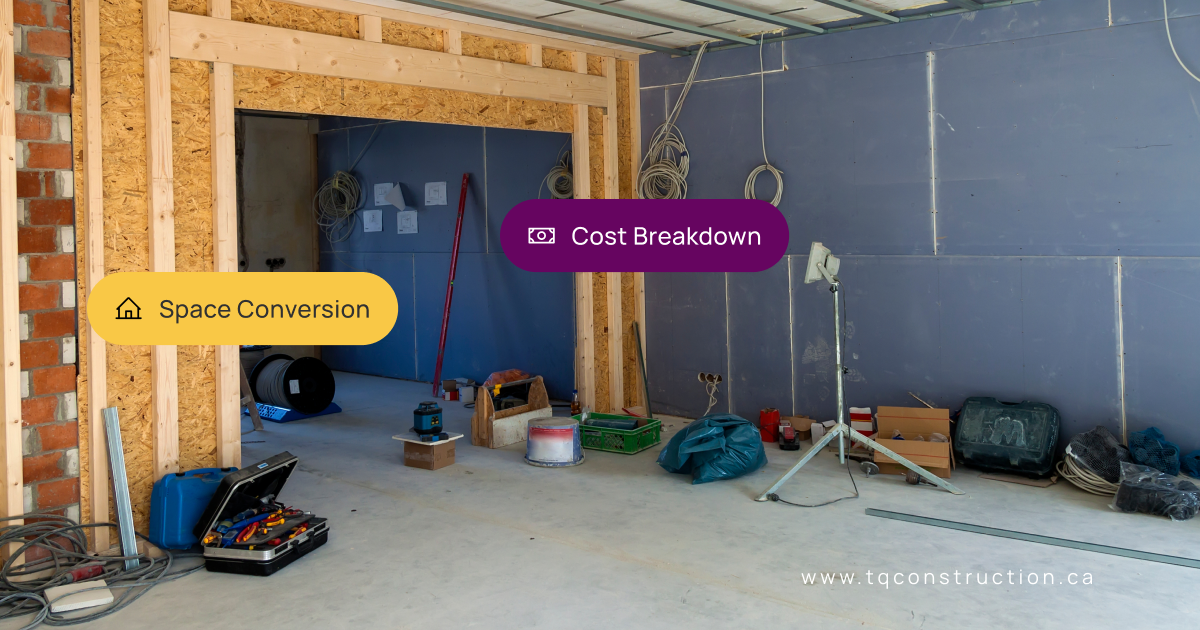

Before
After
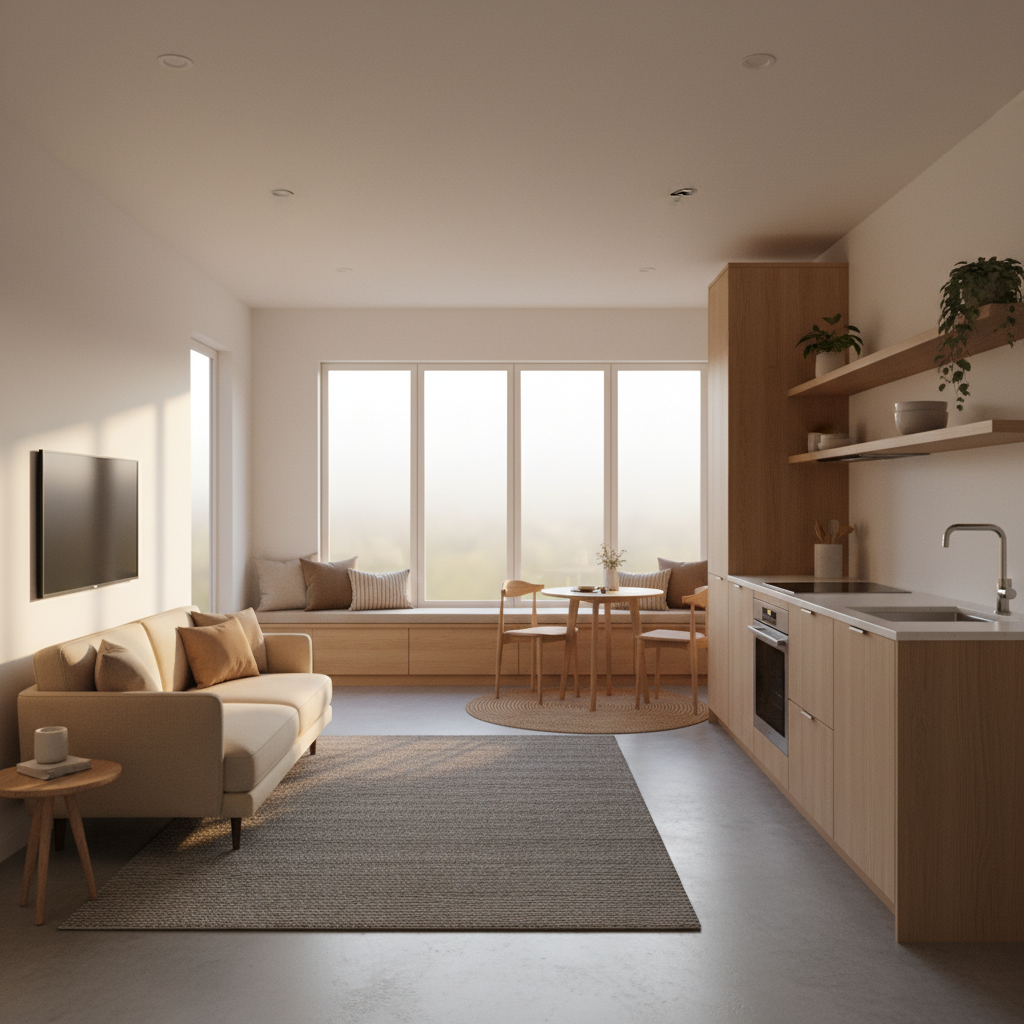
A finished garage conversion can function like a compact secondary suite, not just extra storage space.
Homeowners in Greater Vancouver usually start the same way: you look at the cars that barely use the garage, think about aging parents, older kids, or rental income, and start wondering if that box out back could work harder. Then you ask a few friends and suddenly hear numbers from $80,000 to “well over $300,000,” which doesn’t help much.
This guide pulls the curtain back on real garage conversion cost in our region, with a practical breakdown of what insulation, plumbing, electrical, and finishes actually add to the bottom line. We’ll talk in ranges, not guesses, and explain why two garages that look identical from the lane can land at very different price points - especially once you factor in permits, the BC Building Code, and whether you want a legal rental suite or just more living space.
If you’re looking for grounded numbers and clear next steps for a garage, secondary suite, or ADU conversion, you’re in the right place.
TL;DR: Typical garage conversion price ranges in Greater Vancouver
Every project needs a site visit and detailed plan, but here are realistic 2026 planning ranges for a typical 350–500 sq. ft. garage in Greater Vancouver (excluding GST):
These ranges assume the existing garage structure is worth keeping. If the slab, framing, or roof are in rough shape, or if the garage must be raised or rebuilt to meet current code, the project starts to behave more like a small new build or laneway house.
In Metro Vancouver, new laneway homes commonly land in the $500,000–$600,000 all-in range, so a conversion is usually more economical, but it’s not a “cheap renovation” Smallworks cost data. For a closer look at when a new build makes sense.
Treat all of these as planning ranges, not quotes; a full design-build consultation will refine numbers for your specific garage, municipality, and wish list.
What really drives the garage conversion price?
In Greater Vancouver, the biggest cost drivers in a garage conversion usually hide behind the drywall: structure, insulation, plumbing, electrical, and mechanical systems - not just the paint colour.
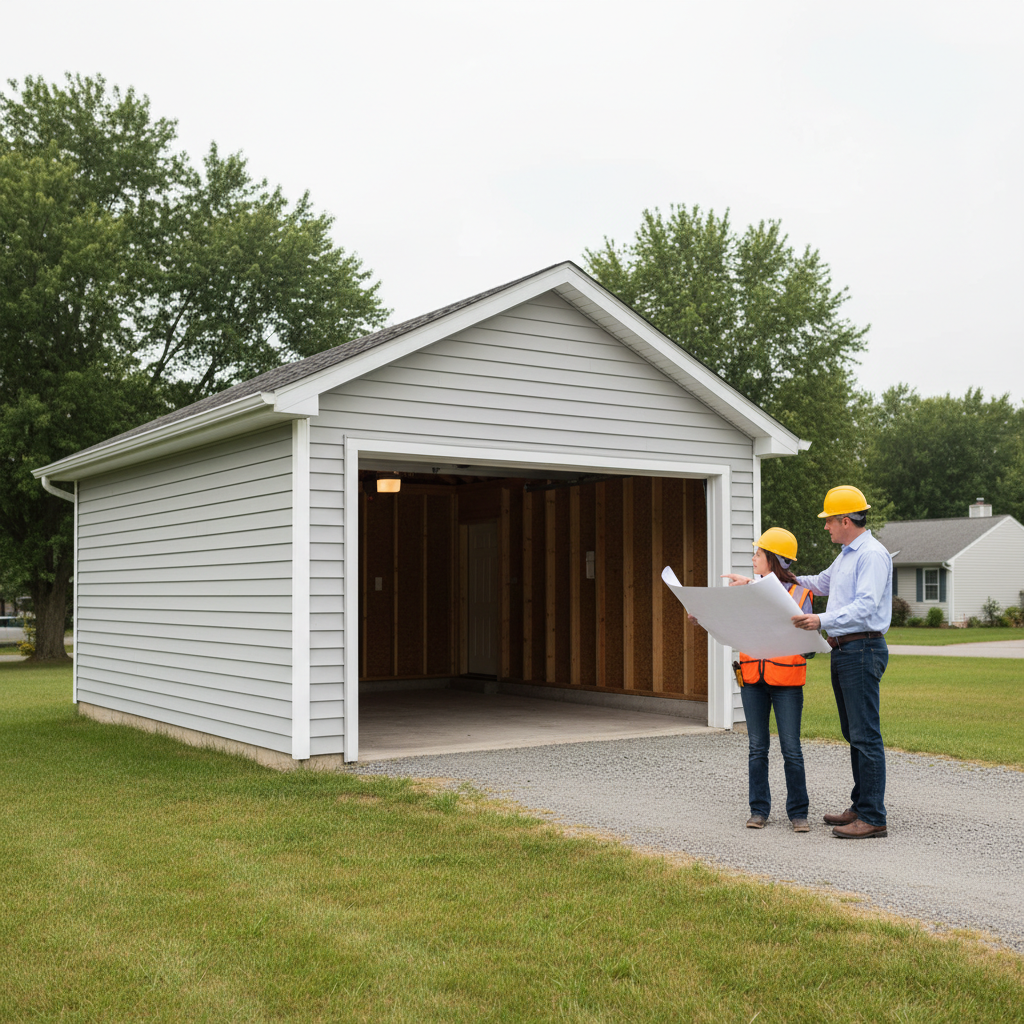
A site visit to assess an existing detached garage helps clarify scope, feasibility, and true conversion costs.
1. Scope: extra flex space vs legal secondary suite vs ADU
The first big question: are you after a warm studio or a full, self-contained home?
- Flex space: family room, gym, office, or teen hangout, possibly with a powder room. Lower cost, but not a legal rental.
- Secondary suite: a private unit within the main home’s structure, with its own kitchen, bathroom, and sleeping area, built to BC Building Code Section 9.37 and your city’s bylaws (BC Building Code).
- ADU-style conversion: garage becomes a fully self-contained dwelling that functions like a small laneway or garden suite. In BC language, this still has to meet the rules for a secondary suite or accessory dwelling unit, depending on how your municipality defines it (BC suite guide).
Each step up that ladder adds plumbing fixtures, electrical load, insulation, and life-safety requirements, which is why a “simple” garage conversion price can jump once a kitchen and full bathroom enter the picture.
2. Existing structure and site conditions
Older detached garages in Vancouver, Burnaby, or the North Shore were meant for storage and cars, not year-round living. Common issues that affect cost:
- Uninsulated slab-on-grade that feels like a skating rink in January.
- Low ceiling heights that don’t meet today’s minimums for habitable space.
- Out-of-square framing, sagging roofs, or undersized beams.
- Moisture intrusion at the slab edge or where the walls meet the concrete.
If the framing and slab are solid, we can put more of your budget toward mechanical systems and finishes. If not, some of the dollars you hoped to spend on tile and cabinetry have to move into structure and envelope upgrades. And if your property includes a character or heritage home, it’s worth planning the garage conversion alongside any bigger-picture upgrades to the main house; our heritage renovation services and home additions services speak directly to that kind of project.
3. Design, permits, and city fees
In BC, secondary suites and accessory dwelling units must meet both local zoning bylaws and provincial BC Building Code requirements. That typically means:
- Architectural and structural drawings.
- Building, plumbing, and electrical permits.
- Inspections at key stages such as framing, insulation, and final occupancy.
Cities across Greater Vancouver follow similar permit and inspection steps, even if the paperwork looks different. Soft costs such as design, engineering, surveys, and permit or utility fees often account for 10–18% of project cost on small infill projects, so they should be part of your budget from day one.
If you’re a homeowner who cares about doing this once and doing it right, ask early whether your contractor will handle design and permitting in-house or expects you to coordinate that separately. An integrated design-build firm such as TQ Construction can streamline the process so you’re not stuck translating between designer, engineer, trades, and city staff.
Insulation and building envelope: comfort, energy, and code
Most garages in Greater Vancouver were never insulated to the same standard as living rooms. To turn one into comfortable, code-compliant living space, we usually treat it more like a small addition than a paint-and-furniture makeover.

Upgrading insulation and the building envelope is a major driver of garage conversion cost, but it pays off in comfort and efficiency.
Typical insulation and envelope upgrades
- Walls: opening up existing walls, adding modern batt or spray-foam insulation, continuous air and vapour control, and sheathing as needed.
- Ceiling / roof: upgrading attic or cathedral ceilings to current R-values, managing ventilation, and in some cases reframing to pick up height.
- Slab / floor: new insulated subfloor over the existing slab, or localized slab work where moisture or heaving is an issue.
- Openings: replacing the overhead garage door with insulated wall, windows, and a proper exterior door, all integrated into the existing envelope.
What insulation does to your garage conversion cost
For a typical single or small double garage conversion in our climate, envelope work (framing adjustments, insulation, air-sealing, windows, and doors) often represents roughly 15–25% of the hard construction budget, or about $20,000–$45,000+ depending on how much of the existing structure we can reuse and whether we’re correcting structural or moisture issues.
Provincial energy-efficiency programs sometimes offer rebates for insulation and other upgrades. Programs such as BC Hydro’s insulation incentives have helped homeowners offset the cost of improving attics, exterior walls, and other assemblies. The rules change regularly, so treat any rebates as a bonus rather than a core part of your garage conversion budget.
You’ll feel the payback of good envelope work every single day: warmer floors, quieter rooms, and fewer drafts—all especially noticeable in Greater Vancouver’s long, wet shoulder seasons.
Plumbing: bathrooms, kitchens, and drainage
Plumbing is one of the biggest levers on garage conversion price. The step from “nice heated studio” to “legal secondary suite” really happens when you add a full bathroom and kitchen plumbing.
Key plumbing decisions that move the budget
- Number of fixtures: a full bath (toilet, sink, shower or tub) and a kitchen sink are the baseline for a self-contained suite under BC’s definitions.
- Drainage path: whether we can tie into existing sewer lines with gravity flow, or need deeper excavation, re-routing, or a sewage pump.
- Hot water: shared hot water tank vs dedicated tank or tankless unit for the suite.
- Water supply size: older homes sometimes require upsized water service to handle the extra fixtures.
For a typical Greater Vancouver garage conversion into a legal 1‑bed suite, plumbing (underground work, rough-in, and fixtures) often falls into a $30,000–$60,000+ planning range. A powder room with no kitchen can cost less, but underground and rough-in work doesn’t shrink proportionally with the number of fixtures.
Because plumbing is tightly tied to layout, this is one of the areas where design-build really shines. Small tweaks to where the bathroom and kitchen sit relative to your existing services can shave thousands off trenching and pumping equipment and turn an awkward plan into a comfortable one.
Your municipality may have additional rules about backflow prevention, sump requirements, and stormwater management, especially if you are close to a lane or in an area with combined sewers. Reviewing those early alongside the provincial secondary suite guidelines helps you avoid rework mid-project.
Electrical and mechanical systems: power, heat, and ventilation
Electricity and mechanical systems are easy to underestimate because most of the work is hidden. In practice, they’re central to comfort, safety, and long-term operating costs.
Service capacity, panels, and circuits
Many older Greater Vancouver homes still run on 100‑amp service. By the time you add an electric range, baseboard or heat pump, ventilation fans, and general circuits for a new suite, that service can be stretched past where any electrician is comfortable.
- Service upgrades: moving from 100‑amp to 200‑amp service (and sometimes beyond) plus a modern panel for the main house and suite.
- Dedicated circuits: for kitchen appliances, baseboard heaters or a heat pump, bathroom fan, laundry (if included), and electric vehicle charging if you’re keeping some parking.
- Life safety: interconnected smoke and CO detectors, emergency lighting where required, and appropriate arc-fault / ground-fault protection.
On a garage conversion that becomes a legal suite, it’s common for electrical and mechanical work together to represent 15–25% of your hard construction budget, similar to patterns seen on laneway houses and high-quality basement suites across Metro Vancouver (laneway cost data).
Heating, cooling, and ventilation choices
Greater Vancouver’s building and energy standards push small suites toward efficient systems. Typical options include:
- Electric baseboard + bath/kitchen fans: lowest upfront cost, simple, perfectly acceptable in many suites when designed correctly.
- Ductless mini-split heat pump: higher initial investment (often $10,000–$20,000 installed in a small suite) but excellent comfort, cooling, and lower electrical bills compared to baseboards.
- Tied-in forced-air system: sometimes possible if the existing furnace and ductwork can handle another zone, but often tricky in garages because of layout and code requirements.
- Balanced ventilation (HRV/ERV): increasingly common to maintain good indoor air quality in compact suites built to tight envelope standards.
As a planning range, homeowners in our region might allow $15,000–$35,000+ combined for electrical and mechanical systems on a garage-to-suite conversion, depending heavily on service upgrades and chosen equipment.
Align these choices with how the suite will be used over time—rental, family home, or future downsized space—so panel sizing, heating, and outlet locations all support your long-term plans.
Finishes and fixtures: where design choices meet budget
Once the structure, plumbing, and electrical are sorted, you finally get to the part everyone likes to talk about: what the space looks and feels like.
Why small suites can feel “expensive per square foot”
A 400 sq. ft. garage conversion still needs a full bathroom, a kitchen, a mechanical system, insulation, and all the same inspections as a much larger renovation. That concentration of high-cost rooms in a small footprint pushes the apparent per-square-foot number up compared with a big open-plan main floor.
Finish levels and rough allowances
Here’s a simple way to think about finish budgets for a garage conversion (finishes only, not structure or services):
*These numbers are broad allowances to help with mental math, not quotes. Actual costs depend on specific selections and current market pricing.
Sound control between the suite and main house is another finish-adjacent cost that homeowners rarely regret. Thoughtful assemblies (resilient channels, insulation, double layers of drywall in key locations) add comfort and privacy for both households for decades.
If you’d like to see how TQ balances finishes and budget on real-world projects, browse our renovation and addition projects gallery.
Smart ways to plan your ADU conversion cost
Costs in Greater Vancouver have climbed quickly over the past decade. You can’t change market prices for labour and materials, but you can control how clearly your project is scoped and managed.

Clear planning and a detailed cost breakdown up front help keep a garage conversion on budget.
1. Get clear on the “why” before you price the “what”
- Rental income? Prioritize durable, easy-to-clean finishes and a layout that appeals to a broad set of tenants.
- Multi-generational family living? Think about accessibility, acoustic comfort, and smart storage for long-term living; our multigenerational living guide has more ideas.
- Future flexibility? Some owners build for parents now and plan to move into the suite themselves later, which can justify a higher finish level.
2. Budget for soft costs and contingencies
Across projects like basement suites, laneway homes, and garage conversions, soft costs (design, engineering, surveys, permits, utility fees) often sit around 10–18% of construction cost (Smallworks cost data). Setting aside an additional 10–15% contingency for surprises such as hidden moisture, asbestos, or unknown underground conflicts keeps you from scrambling halfway through.
3. Keep an eye on incentives, but don’t build your whole plan around them
BC regularly updates its mix of energy and housing incentives, from insulation rebates to programs that support creating secondary suites. Programs change, pause, and reappear, so treat them as helpful bonuses rather than the foundation of your financing plan; our Vancouver rebates guide is a good starting point.
4. Choose a process, not just a price
An integrated design-build contractor like TQ Construction handles feasibility, design, budgeting, permitting, and construction under one roof. That approach tends to:
- Expose real costs early, not halfway through construction.
- Align design decisions with your budget instead of designing in a vacuum.
- Give you a single, accountable team instead of a web of separate consultants and trades.
For busy homeowners, that single-point accountability often matters as much as the final garage conversion price.
Talk with a design-build team before you lock in numbers
Converting a garage into a legal suite or ADU in Greater Vancouver is closer to building a small custom home than painting a spare bedroom; done thoughtfully, it can add flexible living space, rental income, and long-term value.
If your home is in Vancouver, Burnaby, the North Shore, or the Tri-Cities, our team at TQ Construction has been designing and building complex renovations and additions since 1985. We can:
- Walk your property and assess whether the existing garage is a good candidate.
- Outline realistic garage conversion cost ranges for your specific goals.
- Map out the steps for design, permitting, and construction in your municipality.
Request a Free Consultation to start a grounded conversation about your garage, your budget, and the kind of space that would genuinely make life easier for your household.
Key takeaways
- For a typical Greater Vancouver project, expect a garage conversion cost starting around $120,000 for simple heated flex space and reaching $180,000–$300,000+ for a legal 1‑bed suite, with larger ADU-style conversions often running higher.
- The biggest drivers of final price are scope (flex space vs legal suite), existing structure condition, insulation and envelope upgrades, plumbing and electrical complexity, and your finish level.
- Soft costs — design, engineering, permits, and fees — are a meaningful part of the budget and should be planned from day one, not treated as extras.
- Working with an experienced, local design-build contractor helps you line up bylaws, permits, budget, and construction into one clear process instead of a patchwork of separate decisions.
Get those pieces aligned, and your underused garage can turn into one of the most valuable and hard-working parts of your property.
Frequently Asked Questions
What services does TQ Construction offer?

How long does a home renovation project take?
Do you help with design and permits?
How much does a home renovation cost in Vancouver?
Why choose TQ Construction over other construction companies in Vancouver?
1
What Clients Say About Their Home Renovation Experience in Vancouver
Clients who worked with TQ Construction often share how smooth the process felt and how well every detail came together. Each renovation is handled with care, clarity, and a focus on real results, creating homes that look great, feel balanced, and work better every day.
“They are professional, organized, responsible and trustworthy. The crew is skilled, friendly, helpful and attentive – fabulous!”
Martha H.
North Vancouver
“Communication, transparency, and follow through are superb... Working with TQ has felt more like entering a project with a partner rather than an adversary.”
Jon A.
Vancouver
4.7 Star Rating
500+
Projects Completed
“Their expertise and experience are key factors... workmanship is outstanding... team is professional, well organized and clearly communicate.”
Irene H.
North Vancouver
“I would not hesitate to recommend TQ Construction to anyone contemplating renovations.”
Mike J.
Vancouver
Let’s get started
Ready to start
your own story with TQ?
Thinking about a home renovation or new build in Vancouver? Tell us a few details, and our team will send you a free, no-obligation quote. TQ Construction makes it easy to plan your budget before you start.